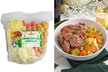
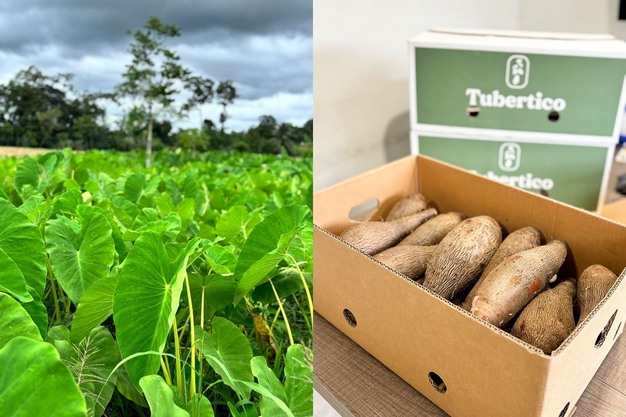
Costa Rica's cassava market is currently experiencing a mix of contrasts. Pablo Quirós from Tubertico, a company with over 20 years of expertise in producing and exporting tubers like cassava, yams, malanga, and taro, explains, "We sell the same quantity in economic terms, but in fewer containers. Consumers have less purchasing power," he notes. Despite cassava prices reaching historic highs, demand appears to be contracting.
 © Tubertico
At present, approximately 80% of Tubertico's exports go to the United States and Caribbean islands, primarily Puerto Rico, Guadeloupe, and Martinique. However, the rise in U.S. tariffs from 10% to 15% has encouraged the company to explore new markets, particularly in Europe. "Spain and France are our main targets, and cassava is our calling card," Quirós stated.
 © Tubertico
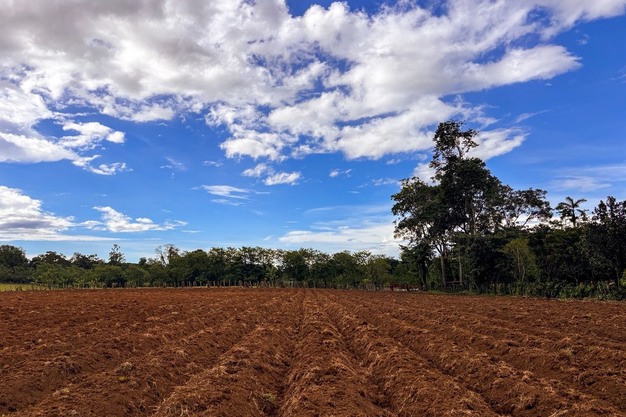
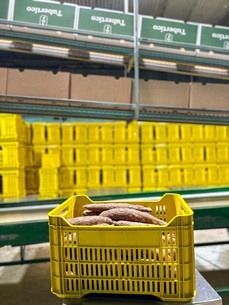
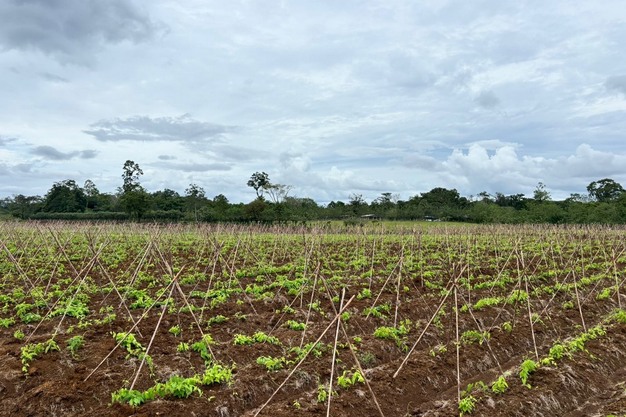
The sector's production is increasingly challenged by adverse weather conditions. Excessive rainfall has impacted both product supply and quality, leading to field shortages. "There is less product available, which has driven up the price of cassava, while prices for other tubers like malanga and yams have decreased sharply," he stated.
 © Tubertico
Another recent challenge comes from the new European Green Pact regulations, which restrict the use of paraffin in cassava's protective wax. Spain has been particularly strict in enforcing these rules. "We are switching to alternatives with vegetable wax, although the visual appearance might be different. It is a necessary transition to stay in the European market," Quirós added.
The strengthening of the Costa Rican colón against the dollar directly affects export profitability. "The effect has been quite immediate; both volume and prices are noticeably impacted," he said. Additionally, logistics costs and the need to diversify markets to reduce reliance on the U.S. contribute to the overall situation.
Tubertico exports about 200 containers annually, including full and mixed loads tailored to each client's needs. Currently, cassava is sold only fresh, but the company is developing a frozen product line to expand its offerings and reach different market segments.
 © Tubertico
Despite the difficulties, Quirós stays hopeful about the potential of tropical tubers in Europe. "Cassava is a gluten-free food that is gaining appreciation for its versatility. Many European consumers are discovering it through Latin American friends and are returning for its flavor and texture," he concluded.
 © Tubertico For more information:
Pablo Quirós
Tubertico
Costa Rica
Tel: +506 8948 4292
Email: [email protected]
www.tubertico.com