 © Izak Heijboer | FreshPlaza.com
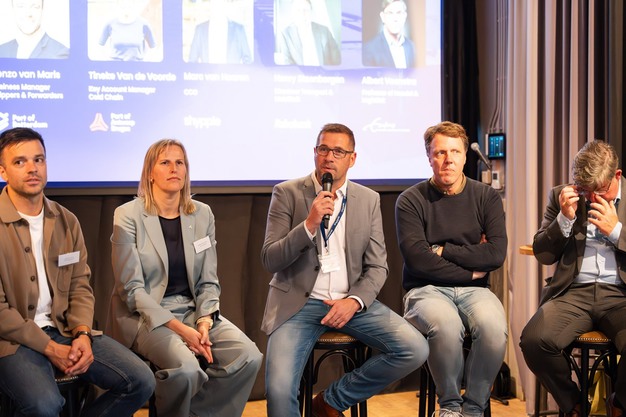
Negotiations with shipping lines for the 2026 annual contracts are back in full swing. In this interview, CCO Marc van Haaren of digital forwarder Shypple shares his insights on the current role of shipping lines in the market, the balance between capacity and rates, and expectations for 2026.
According to Marc, the ocean freight situation this year is not much different from previous years. "If you exclude Covid, because that was quite extreme, there have always been fluctuations in sea freight. You still see the biggest swings on the routes from Asia and North America to Europe. However, Trump's import duties had a major impact this year. Customers immediately started reconsidering or pausing their cargo flows to see how the situation would develop."
When asked about available capacity, Van Haaren says there is plenty of space on ships, and many shipping companies have invested in additional vessels, meaning there will be more supply in service again next year. "As a result, supply and demand now seem a bit more balanced. Shipping companies have become much smarter since Covid and keep the supply in check in a more controlled way through blank sailings, artificially removing part of the allocation from the market."
Rates
Asked how Marc assesses current ocean freight rates, he replies, "At Shypple, we have major flows from Asia and from Central America to Europe. For the latter trade lanes, the CES service will end on 1 January. This will have a major impact on the plant sector, particularly for melons and pineapples, so we're working with the shipping lines to put the right puzzle pieces in place. The market has been fairly stable over the last two years, but now that this service is ending, we expect supply and demand to become more imbalanced and rates to start rising, so the next few weeks will be interesting to see how that reflects in pricing."
"The market for ocean freight from the East to Europe is always a bit more volatile. Supply and demand are simply less balanced there. So shipping companies will again try to push rates up artificially. We saw a peak in mid-2025, followed by a sharp drop. Now they're trying to lift rates again, mainly driven by the annual contracts currently being negotiated. At the Shypple Event at Hotel New York in September, I predicted that the market was heading toward a certain level, and you can now see it moving in that direction."
 © Izak Heijboer | FreshPlaza.com
Red Sea route
With a peace agreement in the Middle East, the reopening of the Red Sea route also seems increasingly within reach. Asked whether the Shypple CCO expects any changes in sea routes soon, he replies, "Not immediately, but we can already see that CMA CGM has opened routes from the Middle East to the Mediterranean. Last week, news also came out that they are launching two new routes from the Far East to Europe. At the same time, I always stay cautious. We often see in our track-and-trace system that a ship is shown as passing through the Red Sea but still ends up going via the Cape of Good Hope. Still, now that the situation in the Middle East seems to be stabilising, the Red Sea will likely become a more navigable route next year. However, shipping companies will have to coordinate closely to avoid major disruptions in European ports, because multiple vessels could arrive simultaneously. We'll all need to be careful about the congestion that could cause."
Unique proposition for the fresh market
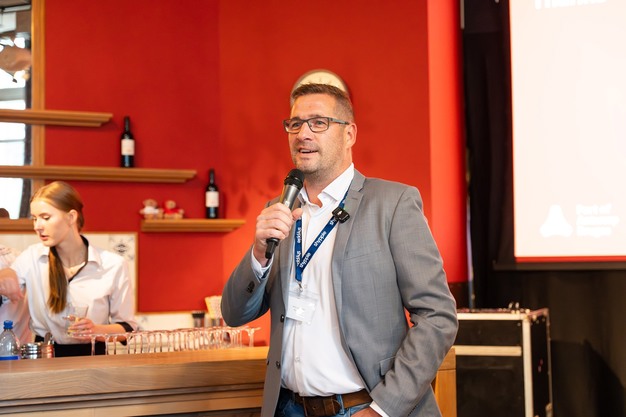
After seventeen years working for various shipping companies, including commercial responsibility for the Benelux at Hapag Lloyd, Marc switched to the other side of the negotiating table five years ago. "Six years ago, I would have told you that the forwarding profession would disappear, but I've changed my mind. Every customer needs a forwarder. With our platform and service combined, we offer a unique proposition for the fresh market. As soon as a container hits the terminal, you can see it on our platform. The entire digital system was developed in-house, and it pays off."
"We saw this at Fruit Attraction in Madrid, for instance. About three years ago, we were still mainly explaining what we did, but now our customers and partners increasingly see us as an essential link. Personally, I like being hands-on and truly taking the burden off the customer. A large shipping company also wants to be service-oriented, but often can't because of its size. We do everything for a customer who imports five containers a month, providing them with full information. If a customer comes to us with large Excel sheets, we get excited!"
 © Izak Heijboer | FreshPlaza.com
Port of Rotterdam position
Meanwhile, Shypple has expanded into the German market. "For us, this was a natural step. We already have many customers who come through Rotterdam or Antwerp as their first port of call and who we then serve in Germany. We want to strengthen those relationships with our existing German customers on one hand, and continue growing on the other, and that's going quite well." According to Marc, the Port of Rotterdam must be careful not to lose its position. "If you look at handling speed, I think Antwerp is already ahead in some areas. During the recent laborers' strike, the entire Port of Rotterdam came to a standstill again. You see that happen every year when the collective labour agreement is negotiated, but they really need to make progress there!"
 For more information:
Marc van Haaren
Shypple
[email protected]
www.shypple.com/perishables