At David Hermans' cultivation facility, the organic pome fruit season is now in full swing. The company, which also grows organic strawberries and cherries, focuses mainly on apples and pears and is currently busy harvesting the last varieties. "We've got about a week left to finish picking the Natyra, after which we'll harvest some fruit for processing. Then the picking season will be over for another year," says grower David Hermans of the eponymous farm.
 © David Hermans
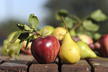
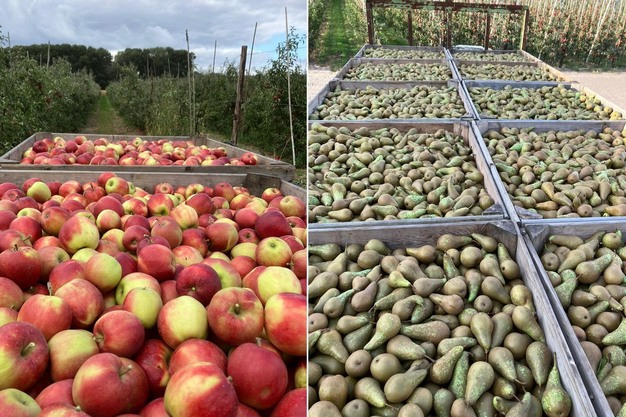
Jonagold and Conference
Not much movement yet in the organic apple market
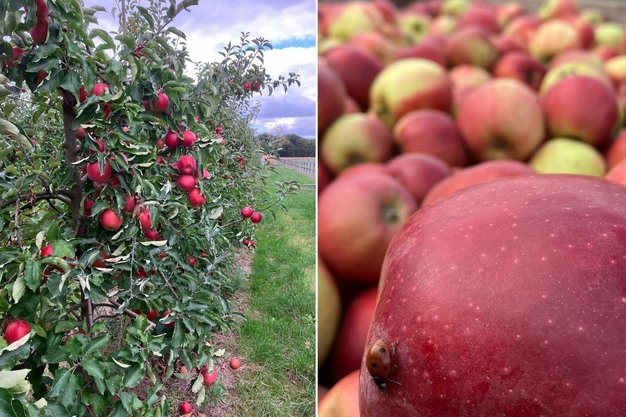
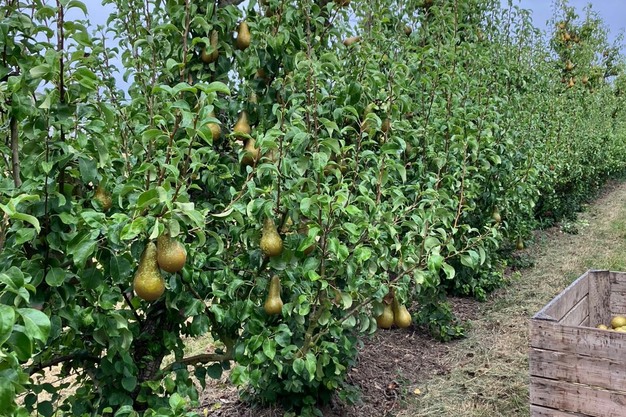
Looking ahead to the coming season, Hermans (who markets all his produce through BelOrta) is cautiously optimistic. "The Conference pears didn't perform as well this year, but the apples are looking good. The pears have all been sold already, mostly for export. Apples tend to stay on the domestic market, so we have to spread sales over a longer period. They're now in cold storage, waiting for the right time to sell. Hopefully, prices will pick up soon, as the market has been fairly quiet so far. Quality-wise, everything looks good, although sizing remains a challenge. The Golden apples were a bit too small, and the Jonagold a bit too big. Perfection doesn't exist, after all," he says with a grin.
 © David Hermans
Jonagold
Letting nature take control
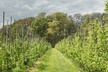
The fruit farm, located in Herk-de-Stad (Belgium), only recently made the switch to organic. Since 2022, the company has been officially certified organic, cultivating around 17 hectares, most of which is dedicated to pome fruit. "We started with organic apples and pears, but since we already had experience with conventional strawberries, we eventually expanded into organic strawberries as well," David explains. "Originally, we were a conventional farm growing standard varieties. But the idea of switching to organic had been on my mind for a while—mainly because I'm fascinated by beneficial insects. We try to use them more and more to manage pests naturally. Eventually, it became difficult to stay commercially viable with conventional production. When opportunities opened up in the organic sector, I decided to take the leap."
 © David Hermans
Conference
That leap came with its share of nerves. "It's risky, because you hand part of the control over to nature. You have to trust that the ecosystem will find its own balance. That first year was tough, especially when pests appeared and there wasn't much we could do. But nature recovered, and things evened out over time." Despite the challenges, he doesn't regret the switch for a moment. "Not at all. On the contrary, I'm really happy I made the change."
Importance of resistant varieties
Today, David, who also has an impressive background in cycling, grows Conference pears, Jonagold, Golden Reinders, and Natyra apples. He's also gradually shifting towards more disease-resistant varieties. "We're taking it step by step. In the future, all new plantings will be resistant varieties, especially since products like copper are coming under increasing pressure. We're consciously looking for varieties that are less susceptible to scab. That's becoming essential, particularly in organic cultivation."
 © David Hermans
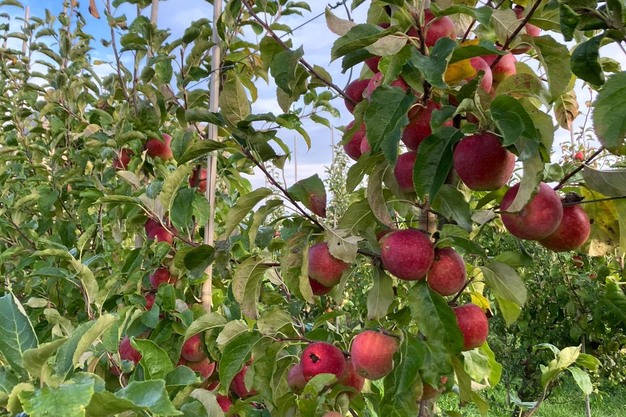
Natyra
He's very positive about Natyra. "It's a resistant variety, and we're harvesting it now. The apples are a bit smaller, but last year we clearly saw the benefits, while Jonagold suffered from scab, Natyra stayed clean, green, and healthy. That's encouraging to see."
For the coming years, David plans to continue investing in resilient varieties. "We're looking at varieties like GoodnessMe. Those are really the future. Fortunately, a lot of research is being done on new cultivars, both for organic and conventional systems. Everyone benefits from reducing pesticide use. The climate is becoming increasingly unpredictable—one year it's extremely wet, the next it's dry or scorching hot. The balance is gone. That's why strong, disease-resistant varieties are more important than ever. We need fruit that can handle whatever nature throws at it."
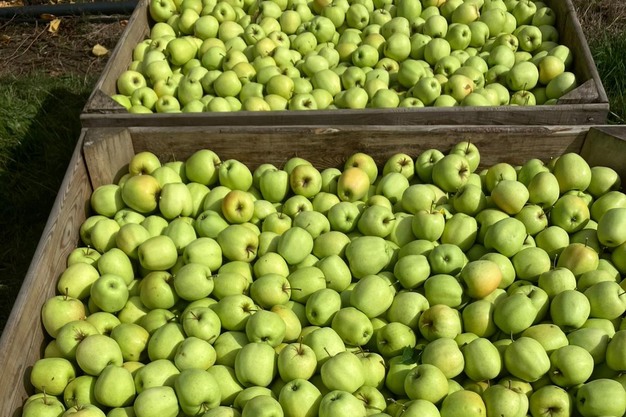 © David Hermans
Golden Reinders
For more information:
David Hermans
Fruit Farm Hermans
Nieuwmolenstraat 4
3540 Herk-de-Stad, Belgium
Tel.: +32 13 55 41 04