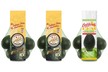
In Italy, there's a growing trend of people imbibing coconut water straight from the fruit, as if it were a tropical cocktail savored on the beach. Giorgio Donnarumma, Nuovafrutta's Milan-based sales manager, can confirm this trend. Nuovafrutta has distributed drinkable coconuts on the domestic market for over ten years and has recently experienced a surge in demand.
"When we first started," says Donnarumma, "Italians considered drinking coconut water to be a niche luxury. In contrast, coconut water has always been an integral part of the daily diet of tropical coastal populations. Over time, however, this perception has changed, and today, the product is becoming increasingly popular among Italians."
 © Nuovafrutta
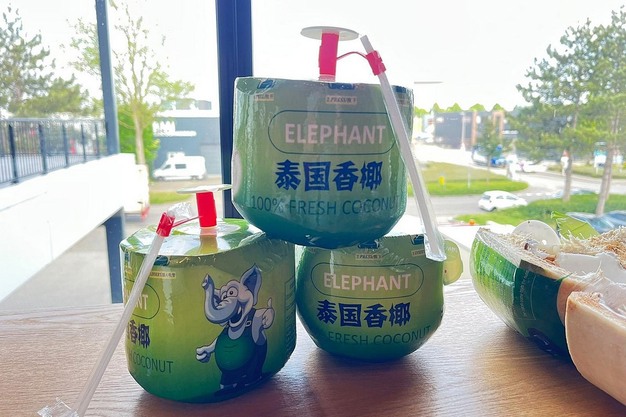
This change was favored by the growing interest in healthy lifestyles and the increasing focus on easy solutions. "In the past, coconuts arrived peeled and packaged, but you still needed a screwdriver or drill to open them. Today, we are in the ready-to-eat era. That's why we created an easy-to-open system with an integrated cap that allows you to open the fruit with one simple action and drink it directly with the included straw."
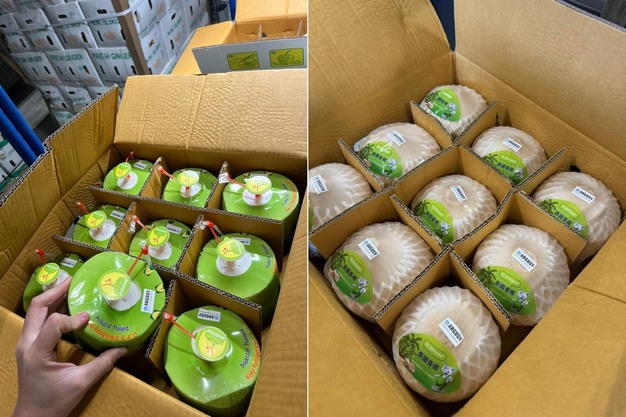 © Nuovafrutta
The design evolution extended beyond functionality. The drinkable coconut has also been transformed into a design product, complete with colorful lettering and attractive packaging. Often, it is enriched with QR codes that link to videos demonstrating the best ways to enjoy it. TikTok then took care of the rest. "Some young influencers started showing it in their videos," explains Donnarumma, "and from there, a word-of-mouth buzz took off. This year, orders have doubled since 2024, with one product being published and the other following suit."
Young coconut, also known as fresh young coconut of Thai and Vietnamese origin, is distributed by Nuovafrutta under the Elephant brand. Nuovafrutta is the exclusive importer of this product to Italy. It is a natural drink rich in potassium and mineral salts. Donnarumma defines it as "a natural supplement that young people especially like. It's perfect for keeping them cool in the summer months, and it won't break the bank."
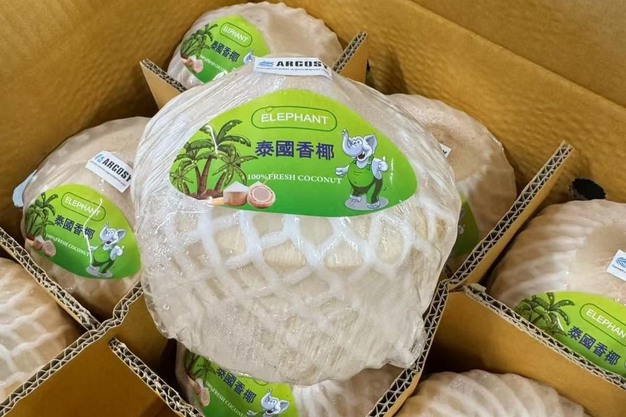 © Nuovafrutta
"The water is pure and unprocessed," emphasizes the wholesaler. "It comes straight from the fruit. All you have to do is insert the straw and enjoy it. That's the real added value compared to the industrial bottles found in supermarkets."
The mango market is oversupplied, prices have halved, and the market is stagnant. While the summer of 2025 was positive for coconuts, the same cannot be said for mangoes. Donnarumma bluntly calls it a "disaster" due to the oversupply flooding the market. "In the space of a few weeks, mango supplies from Spain, Israel, Brazil, Santo Domingo, and Egypt - not to mention the latest shipments from Mexico - entered the market simultaneously. This caused prices to collapse and demand to stall."
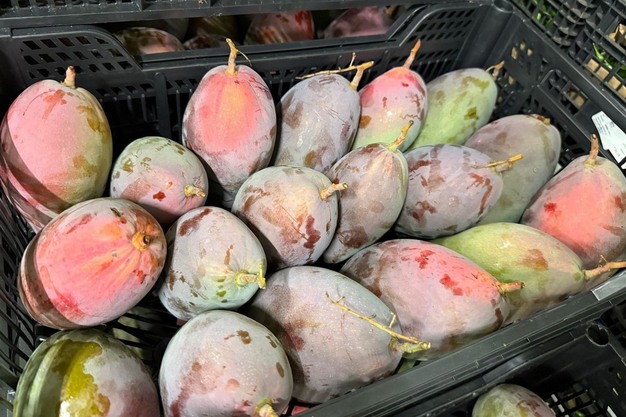 © Maria Luigia Brusco | FreshPlaza.comSpanish Mango Osteen
The numbers tell a clear story. The price of Spanish mangoes, which started at 3-4 euros per kilogram, dropped to 1.60 euros per kilogram in less than a month. This significant decrease occurred during the Spanish campaign and halved the price. Israel, which started with varieties like Shelly, Maya, Kasturi, and Aya, has followed the same trend. Initially, 4-kg crates sold for over 2 euros per kilogram, but now they sell for around 1 euro per kilogram. Mexico is still maintaining higher prices due to its late Kent harvest; the price is 40-45 euros per 6-kg crate. However, this campaign is drawing to a close.
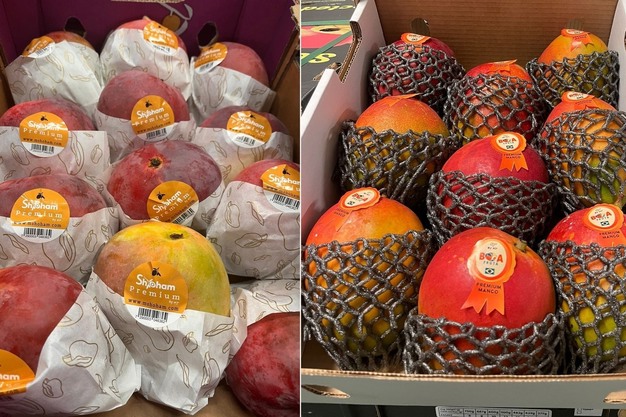 © Maria Luigia Brusco | FreshPlaza.com
Left: Israeli mango. Right: Brazilian mango by air
The situation is further complicated by inconsistent quality, including different gauges and levels of packaging, such as open top, sticker, and decorative straw. There are also significant differences between products imported by air or sea. "You can find fruit at all prices," Donnarumma points out, "but the market is basically at a standstill because consumers aren't interested. However, in the summer, there is a preference for local, seasonal fruits, such as stone fruits, watermelons, and melons."
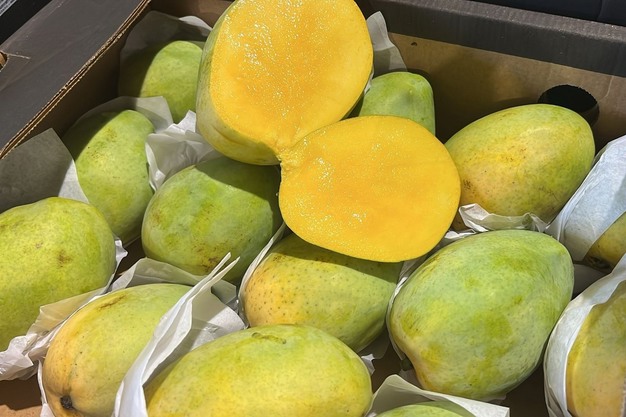 © Maria Luigia Brusco | FreshPlaza.comEgyptian mango
The result is a struggling sector where competition between origin countries has generated an oversupply of products at the least opportune time, when demand is focused on Italian seasonal products. "Excess supply and sluggish demand result in unsustainable prices for producers and reduced margins for all operators," Donnarumma concludes. Mangoes are still beloved, but they are currently struggling to find their place. Only a rebalancing of volumes will allow the market to recover."
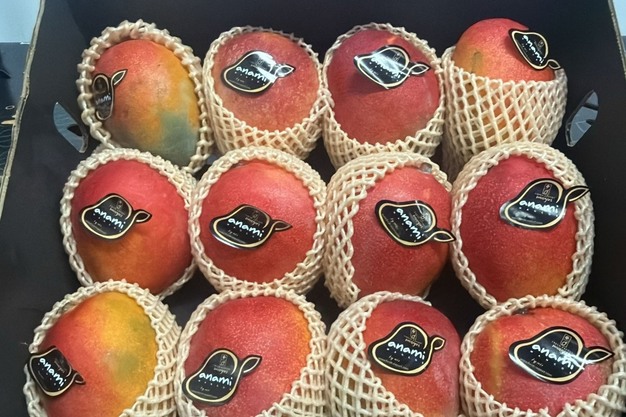 © Maria Luigia Brusco | FreshPlaza.com
Mexican Kent mangoes transported by air
Challenging weeks for limes too
Both mangoes and limes had complicated weeks. The main cause was a phytosanitary disease that affects the fruit's stem during the summer months. This disease forced many containers to be destroyed or cleaned manually, resulting in high costs and the aggravating factor of the fruit often turning yellow. "It was supposed to ease the market by reducing volumes," explains Donnarumma, "but it ended up worsening the situation, leading to a collapse in prices."
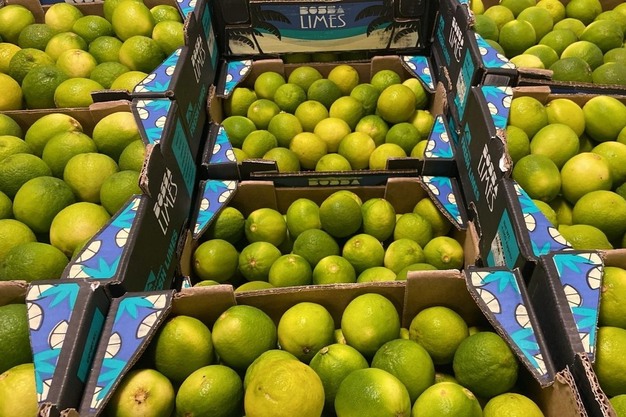 © Maria Luigia Brusco | FreshPlaza.comBrazilian lime. The product's yellowish hue is due to its prolonged customs clearance time, which is linked to a phytopathy that affected the fruit peduncle during the summer months.
Currently, limes sell for between 5 and 6 euros per box, with the finest lots reaching 7 euros. However, this is far from the 8-9 euros that would be considered balanced. Adding to the uncertainty is the start of the Spanish and Italian campaigns in September, which will further increase availability. "It will be a difficult month," the wholesaler concludes, "but the lower number of departing containers could help restore some stability."
For more information:
Nuovafrutta
Via Cesare Lombroso 54
20137 Milan - Italy
[email protected]