The blueberry sector in southern Africa, primarily in South Africa and Zimbabwe, is showing rapid growth alongside the established Moroccan industry in the north of the continent. While the region benefits from favourable climatic and logistical conditions, its long-term sustainability and competitiveness depend on infrastructure consolidation, market diversification, and the removal of structural barriers.
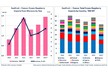
In South Africa, key production regions such as the Western Cape, Limpopo, and Mpumalanga, along with Zimbabwe's highland areas, have mild winters and early springs. These conditions allow harvesting from August to November, before peak seasons in Peru and Chile. The proximity to export ports in Cape Town and Durban, combined with preferential trade agreements with the EU and UK, supports access to high-value markets. South Africa exported nearly 25,000 tons of blueberries in 2024, with projections of more than 50,000 tons in 2025, according to Blueberries South Africa.
Zimbabwe has doubled its production in less than five years to 8,000 tons annually, making it the second-largest producer in southern Africa. The country aims to expand to 1,500 hectares under cultivation by 2030, which could allow comparable exports to established markets. Coordinated infrastructure, logistics, and phytosanitary measures across the subregion could help position southern Africa as a new blueberry export hub in the southern hemisphere.
However, several obstacles remain. In South Africa, high inland transport costs, port congestion, and energy supply instability increase logistics costs by 20% to 30% compared to competitors. Regulatory constraints under the Broad-Based Black Economic Empowerment (B-BBEE) framework also restrict new exporters and limit the participation of smaller producers in international supply chains.
In Zimbabwe, challenges include legal uncertainty over land tenure, limited access to agricultural financing, and dependence on foreign investors, which slows sector professionalisation and capacity expansion.
Market access is another key issue. The industry remains dependent on the UK and EU, which together account for more than 75% of export volumes. Post-Brexit trade tensions and changes in phytosanitary and digital traceability requirements present potential risks. Diversification into Asia, the Middle East, and North America has yet to be realised. South Africa has initiated exploratory trade discussions with India and China, but no formal market access has been secured.
For southern Africa to consolidate its position as an exporting region, investment in logistics infrastructure, reforms to improve access to agricultural finance, stronger regional public-private partnerships, and a focus on market diversification will be required. Addressing these factors could enable the region to move from being a seasonal blueberry supplier to a strategic participant in the global berry trade.
Source: Blueberries Consulting