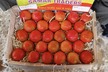
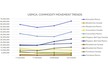
Weather data indicates that Chongqing experienced a substantial rise in lychee sales during the summer, as noted in the 2025 Chengdu-Chongqing Agricultural Trends Report. Specifically, online sales surged by 275.3% in June, led by the Feizixiao variety, which accounted for over 40% of purchases.
The lychee's historical significance in Chongqing dates back to the Tang Dynasty, with evidence suggesting the fruit enjoyed by imperial consort Yang Yuhuan originated from the Fuling District. Historically, transportation infrastructure in Chongqing and Sichuan was developed to facilitate the movement of lychees to Chang'an, the Tang capital, now near Xi'an. This ancient lychee route included Fuling, a strategically important hub, and in 2024, it was recognized in China's Tentative List for World Cultural Heritage.
Chongqing's eastern Sichuan Basin geography provides optimal conditions for lychee cultivation, characterized by sufficient rain and high temperatures. Prominent production locales include Nan'tuo in Fuling, known for its extensive lychee orchards producing varieties like Feizixiao, Dahongpao, and Guiwei. Jiangjin District also supports lychee agriculture, boasting 7,000 acres in Tang'he, benefiting from sunlight and long frost-free seasons.
The adaptation of Ma Boyong's novel, The Litchi Road, into a TV series has incited a nationwide interest in lychees. The narrative follows Li Shande of the Tang Dynasty, tasked with transporting fresh lychees over extensive distances, resonating with audiences and rekindling interest in lychees.
Local shop owners, such as Liu Heng, note Feizixiao's popularity, partly credited to its link with imperial stories. Shop owners observe a 30% increase in sales compared to the previous year, influenced by current media portrayals.
Source: Chongqing