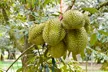
Malaysia's unpredictable weather is compelling durian growers to categorize their produce into two groups: Varieties sturdy enough for export and more delicate types for local consumption. Variable weather patterns, including irregular downpours and intense heat, are contributing to the shortened shelf life and potential damage during transport, making cross-border logistics particularly challenging, as detailed in an article by The Straits Times after visiting orchards in Johor and Penang during the July–August harvest.
Chin Kuan Voon, who manages a durian orchard in Bekok, Johor, mentioned, "The weather used to be more predictable. We knew when in the year it would rain, but lately, it's raining all the time. From last year till this year, the rain hasn't stopped." Chin's 20-hectare VS Farms focuses on Musang King, Black Thorn, and the newly introduced Tupai King, with only the first two aimed at markets in Singapore and China due to their firmness, bitterness, and suitability for long transport durations.
In contrast, Penang's Tupai King is expected to appeal mainly to Malaysian consumers. According to Penang planter Eric Yeap, this variety remains local because "the eight-hour journey from Penang will affect its quality." Recent storms have already toppled four mature trees in Chin's orchard, and he anticipates a 40% drop in yields by 2025, likely causing a 10-15% increase in prices. The thinning harvest necessitates strategic decisions on which orchards to utilize for export orders to minimize losses.
The unpredictable weather, including unusually warm nights, has impacted other varieties such as D24, which loses quality under such conditions. On the other hand, Musang King benefits from a thicker skin and lower moisture, making it more resilient. Interestingly, climate fluctuations have led to an unexpected January bloom, resulting in a second, albeit smaller, crop. However, the off-season harvest presents logistical challenges, as transportation coincides with the busy Chinese New Year period, complicating export efforts.
The pricing dynamics of durian are shaped not just by taste but by branding. The Tupai King from Penang, priced at up to $45 per kilogram, commands a considerable premium over Musang King. Despite its high market potential, Chin emphasizes the need for variety over exclusive premium offerings. While climate changes impose constraints, it also ensures that Malaysia's most distinctive and flavorful durians are best enjoyed locally.
Source: Malay Mail