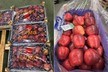
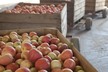
At an apple base located in Bepa Town, Nyingchi, within Southwest China's Xizang autonomous region, Lin Chuanqing oversees a local apple enterprise situated at an altitude exceeding 3,000 meters.
"A wave of orders poured in from overseas," Lin noted. The company, which previously exported apples to Nepal, now anticipates its first shipments to Singapore this year.
"Apples here are favored by foreign markets," he stated. His business manages over 4,000 mu (approximately 266.6 hectares) of orchards. Last year, they exported 490 tons to Nepal, with over 137 tons already shipped this year.
When Lin arrived in Xizang three years ago, the apple sector was in its early stages. Locals primarily sold unsorted apples from backyard plots, and unsold produce was stored in earthen cellars with plastic covers, limiting storage life to just two months.
Lin's company has since invested approximately $22 million (158 million yuan) to establish a comprehensive industrial chain, from seedling R&D to cold chain logistics.
Apples grown on the plateau have notable advantages due to intense sunlight and large day-night temperature differences, which improve both sweetness and firmness.
"Apples of the same size here are 15 per cent heavier than others of the same variety, and our yield will reach 3,000 kilograms per mu during peak season," Lin explained. In addition, sugar content reaches 12 per cent, and vitamin levels are 30 per cent higher than standard apples.
Despite the challenges of vast geography and high transportation costs, apple cultivation here remains cost-effective. Local enterprises benefit from government freight subsidies.
"Transporting apples from Nyingchi to South China's Guangdong province is cheaper than from East China's Shandong province to Guangdong, as subsidies cover nearly half of the transport costs," Lin added.
The region also experiences fewer pest problems. In contrast to other growing areas that require labor-intensive apple bagging, costing about $0.17 (1.2 yuan) per kilogram for pest prevention, minimal pesticide use is needed in Xizang.
"In Xizang, we don't need to bag our apples, and pesticide use is minimal," Lin stated. Nyingchi apples have earned GLOBAL Good Agricultural Practice certification, meeting EU pesticide residue standards, with residues undetectable in dried apple products.
These apples are sorted into 16 grades based on sugar content, size, and color, and are now being shared with global markets. Additional orchards in Dranang County in Shannan and Qamdo are expanding the reach of Xizang-grown apples.
"In November, when the apples are ripe, consumers in Singapore will be able to taste the apples from Nyingchi," Lin concluded.
Source: ChinaDaily