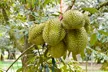
Despite being the world's second-largest durian producer after Thailand, Vietnam imported US$9.3 million worth of durians in the first four months of 2025, nearly six times more than during the same period in 2024. This surge raises concerns about domestic consumer preferences shifting toward imported varieties, even as Vietnam's durian industry continues to expand rapidly.
Bui Phu Ton, director of Nghiep Xuan Import-Export Trading Co. Ltd., attributes the rising imports to media influence and growing demand for premium durian varieties like Musang King. While Vietnam cultivates Musang King in the Mekong Delta, Dong Nai, and Dak Lak Provinces, local production remains limited and often off-season. In contrast, Malaysia has successfully promoted Musang King through national branding efforts, building a strong global image. In high-end stores in Ho Chi Minh City, imported durians like Fumoni Thai, Kanyao Thai, Black Thorn, and Musang King sell for nearly US$38.30 per kilogram, yet demand remains strong.
This trend stands in sharp contrast to falling prices for locally grown durians. Farm gate prices have dropped to as low as US$1.15 per kilogram in the Mekong Delta, just a third of the price one year ago. Nguyen Thanh Binh, a grower in Tien Giang Province, recently sold nine tons of Ri6 and Monthong durians at that price, earning only about US$1,180 in profit after a year of labor.
The cost of maintaining durian trees remains high. Binh spends approximately US$39 per week on post-harvest nutrients and up to US$78 during the flowering period. Another farmer, Luong Nhu Y in Dong Thap Province, has invested over US$19,600 in a 5,000-square-meter orchard, only breaking even after seven years and earning a modest US$2,350 in total profits.
Dr. Le Quoc Dien, former director of the Southern Fruit Research Institute's Center for Science and Technology Transfer, notes that durians take five years to begin fruiting and require precise techniques for pruning, nutrient management, and canopy control. The average cost of growing durians over the first five years is estimated between US$39,000 and US$117,000 per hectare, with annual maintenance costs of around US$19,600 once the trees begin to produce.
Vietnam's durian cultivation area has grown from 32,000 hectares in 2015 to over 178,000 hectares in 2024, with the Mekong Delta accounting for 35,000 hectares—nearly 70% of which are in Tien Giang Province. Annual production now exceeds 1.5 million tons. In 2024, durian exports brought in more than US$3.3 billion, with 97% of shipments going to China.
However, export revenue fell to US$130 million in the first four months of 2025, down from US$500 million in the same period the previous year. Stricter Chinese import requirements—particularly testing for cadmium and the banned dye auramine O—have led to an 83% drop in exports to China. As a result, durian has fallen behind dragon fruit and bananas in Vietnam's fruit export rankings.
In response, local authorities, such as those in Dong Thap Province, are offering technical training to help farmers improve fruit quality, reduce chemical residues, and manage costs. Meanwhile, high-end imported durians continue to gain traction, highlighting the urgent need for a national branding strategy, quality standardization, and post-harvest support to secure the future of Vietnam's durian industry in both domestic and international markets.
Source 1: Tuoi Tre News
Source 2: VNExpress