Only 35% of horticultural projects financed in Kazakhstan since 2015 have been implemented, despite billions in state funding. This was stated by Senator Sultan Dyusembinov during a Senate session, addressing a formal inquiry to the Prime Minister.
Since 2015, the Agrarian Credit Corporation has allocated 48 billion tenge (~$106.7 million) for 46 intensive orchard projects. In the Almaty region, 12 out of 18 projects are still in progress. In the Zhambyl region, 14 projects were financed, but many plantations failed. Of 13 projects in the Turkestan region, only three have reported any progress. The Jetisu region has just one project under implementation.
The senator criticized the lack of effective state control and accountability. He called for a detailed review of each project and transparent reporting. Despite large-scale investments, tangible outcomes remain limited.
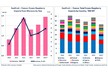
As of 2024, Kazakhstan had 35,300 hectares of fruit and berry crops, with a total harvest of 317,000 tonnes. Yet, average per capita fruit and berry consumption stands at only 80 kg, far below the WHO-recommended 120 kg.
Kazakhstan's horticulture sector faces structural challenges, including weak sales channels, limited access to retail networks, and a shortage of planting stock. Domestic nurseries produce only 1.5 million seedlings annually against a demand of 7 million.
Infrastructure issues also persist. Processing facilities operate at just 36.6% capacity. There are also deficits in storage, water resources, qualified personnel, and digital technologies.
Dyusembinov cited Uzbekistan as a successful model, where from 2021 to 2024 vineyard areas expanded by 43,000 hectares through subsidies, tax incentives, export promotion, and cold-chain development. Kazakhstan's current vineyard area is only 9,600 hectares.
He proposed policy measures including seasonal tariffs, cooperative development, seedling subsidies (up to 70%), agro-hub creation, rural education reform, R&D support, and a digital transformation roadmap for the sector.
Source: eldala.kz