The opening of Bahia's mango exports aligns with the "export window," a period that coincides with the harvest season in the Northeast of Brazil. With U.S.FUS-bound exports set to start on July 1, the Bahia Agricultural Defense Agency (Adab) advises the production and commercial sectors to monitor and manage pests like fruit flies. Adab will organize technical meetings on Friday (29) at Valexport in Petrolina to update procedures.
Adab's Phytosanitary Project coordinator, Weber Aguiar, stated, "The objective is to guide producers, exporters, Technical Managers (RTs) of treatment establishments and production units, improving control and reducing the population index of the quarantine pest fruit flies, in mango orchards registered for export to the American market, the main buyer." About 60 individuals are expected to attend the event.
The event will focus on standards and protocols required at the federal and state levels to control fruit fly populations. It will discuss critical points identified by APHIS and detail how program participants should manage these controls. A newly launched service, MoscaZap, aims to facilitate pest-related inquiries and complaints for stakeholders.
Bahia traditionally starts its mango exports during the "export window," capitalizing on reduced supply in markets such as Ecuador. This period benefits demand for Brazilian mangoes, particularly from Bahia, Pernambuco, and Rio Grande do Norte.
In 2024, the São Francisco Valley, including Petrolina (PE) and Juazeiro (BA), emerged as a primary fruit export hub in Brazil. The region leverages favorable climatic conditions and robust infrastructure to cultivate tropical fruits, with mangoes being the predominant export. The São Francisco Valley accounts for nearly 95% of Brazil's mango exports.
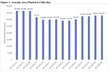
Source: Abrafrutas