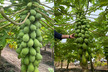
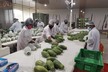
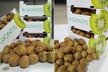
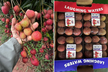
Under President Luis Abinader's administration, the Dominican Republic has seen significant growth in fruit exports, particularly mangoes and avocados. Deputy Minister of Agricultural Production, Eulalio Ramírez, reported that mango exports have more than doubled, rising from $20 million in 2020 to $50 million in 2024. The primary export markets are the United States and Europe.
Avocado exports have also grown, increasing from $223.4 million in 2020 to $309.4 million. The export portfolio now includes emerging fruits such as pitahaya and castaña de masa, though current production falls short of demand. To meet this demand, new plantations are being established with support from the Ministry of Agriculture and financing from the Agricultural Bank.
The Dominican Republic currently has over 60,700 hectares planted with various mango varieties, including Keitt, Minolo, Banilejo, Crema de Oro, and Samaguí. There are 1,900 registered mango producers. Avocado cultivation spans 344,000 hectares, while citrus crops cover 290,000 hectares, with lemons and coconuts making up a significant portion.
The Department of Fruit Trees (DEFRUT) oversees fruit cultivation as part of the country's broader food security strategy. Fruit consumption has increased, and production over the past five years has reached 3,269,139 plants across multiple fruit types. Of these, 2,995,041 plants have been distributed to 25,173 producers—including 6,074 women—covering 102,470 hectares.
Technical assistance has been provided to 2,489 fruit producers, with 3,335 recorded support actions. Under the leadership of Minister Limber Cruz, the Ministry of Agriculture has prioritized reviving native fruits such as sapote, medlar, mandarin, and guava, which were at risk of disappearing. There is also a focus on cultivating new crops like grapes, pitahaya, and castaña de masa, which are increasingly in demand both domestically and abroad.
Once considered a wild fruit, castaña de masa (also known as buen pan) is now valued for its nutritional properties, including phosphorus, calcium, iron, and zinc. It is also processed into gluten-free flour and can be used as a milk alternative.
Source: Dominican Today