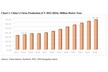
In Punjab, the leading Indian state for kinnow cultivation, the average cultivation area spans 59,000 hectares. The Fazilka district's Abohar town contributes to 60% of the state's total production. The harvest season runs from December to March, peaking in January and February.
This year, favourable temperatures during the flowering stage led to an exceptional harvest, with an expected yield of 1.35 million tons. However, the substantial yield has resulted in a significant drop in farm gate prices. The kinnow crop requires intensive labour throughout its cycle, relying heavily on both hired and family labour. Compared to crops like wheat and paddy, kinnows need continuous micro-management for crop safety.
Despite having a well-established citrus mandi in Abohar, farmers often do not receive favourable prices even after accounting for transportation, loading, and unloading costs. This makes farmers heavily dependent on agents or contractors for marketing their produce. Contractors, due to the perishable nature of the product, play a crucial role in kinnow procurement and price determination.
These contractors distribute the fruit to other states and countries, with contracts finalised in June based on the tree's flower count. Payments are directly transferred to the farmers' bank accounts, with agents bearing all costs of picking the fruit from the farms.
Source: thewire.in