For Taiwan, this winter has been the hottest for 72 years. High temperatures and low rainfall have affected crop growth. According to Council of Agriculture estimates, lychee farms, covering over 7,000 hectares in total, have been impacted. Also, the production of onions and garlic has dropped significantly. As a result, price fluctuations for these crops will be inevitable.
According to the Agriculture and Food Agency, higher temperatures during warm winters retard crop growth, while water shortages reduce yields. Most seriously affected are onions, garlic and Yuherbao lychees. Pingtung’s Hengchun Peninsula is a major onion-growing area, Yunlin produces garlic, and Kaohsiung and Pingtung are major producers of Yuherbao lychees.
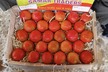
The Agriculture and Food Agency says that onions this year are smaller, with the number of large onions 20% lower than previous years, while some garlic bulbs are not fully grown. The Yuherbao variety of lychee has an earlier production season and is usually harvested in May. This time of year is usually the flowering season for the Yuherbao lychee trees, but this year many have yet to flower, due to the high winter temperatures and low rainfall. It is estimated that 6,500 to 7,800 hectares of lychee farms south of Taichung have been impacted.
Less rainfall means sweeter pineapples
However, warm winter and less rainfall are not necessarily bad for all crops, reports taipeitimes.com. Pineapple farmers in Kaohsiung said that the warm winter and drought increase the enzymes in pineapples. Pineapples are generally 30% sweet and 70% sour, but this year these flavors will be present in equal measure. Also, the pineapples produced this year will have a longer shelf life due to their reduced moisture content. Coffee beans grown in Yunlin’s Gukeng Township, too, are expected to be more plentiful and of better quality this year, as lower rainfall is regarded as conducive to the growth of coffee beans.