Italy: Uncertain future for Amalfi Coast lemon
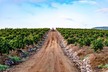
The orchard he works in is soon to commence harvest. Vincenzo can expect to earn around 50 cents per kilo, which is an improvement on last year's returns. However, it does not represent a profit.
As Vincenzo says, "The owner has had this orchard for 15 years and she's never once got back her costs."
It's perhaps just as well for Vincenzo that his work in the orchard is a hobby to him. For he, like most involved in citrus cultivation in this part of the world, is a pensioner. He's 73 years old and he says that young people do not enter into such work in his part of the world. "They can't make any money," he said.
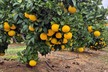
One reason for this is the ease by which citrus can be ferried across from Sicily. The varieties grown there are cheaper to cultivate than sfusato.
So why not change cultivation, or give up altogether. According to Angelo Amato, vice president of the consortium for the protection of the Amalfi coast lemon, this simply is not an option.
"The lemon farmers here are the sentinels of the environment," he says.
With its steep cliffs, the coast is susceptible to landslides. The roots of the lemon trees help to stabilise the ground, and the dry stone walls of the terraces also play a crucial role.
"They are made so that the rainwater which is needed stays, while the rest drains away," said Mario Tozzi, a researcher at the National Research Council (CNR).
The last deadly landslide was two years ago. But there are fears that, if the lemon groves disappear along with their mostly elderly cultivators, the area could see a major disaster like the landslides that killed 161 people in the nearby inland town of Sarno in 1998.
"There are some similarities," said Tozzi. "The old woods above Sarno had been replaced by hazelnut trees with shallow roots."
Attempts have been made to give the lemon a chance, such as the creation of a liquer,which now accounts for 10% of the total crop. it's a vicitm of its own success however. It proved popular enough for it to be imitated, again with lower cost lemons, thus providing the market for cheaper alternatives.
A law was passed four years ago to give the farmers subsidies. But no funds have been found to make it effective.
The brightest hope for the future seems to be the mainly young leadership of the new consortium.
In May an internationally renowned pastry chef, Sal De Riso, was chosen as president.
"I use 5,000kg of lemons a year," he said at his little factory, high in the mountains above the coast. De Riso said one of his aims was to put a squeeze on big firms which make panettone and use minute quantities of the Amalfi coast's lemons so they can put the PGI emblem on their packaging. They were being asked to include a minimum proportion and pay a fee to use the symbol, he said.
Ultimately, though, said Amato, the future depended on making the business more efficient and drawing in younger people. "With modern irrigation equipment and a minimum of between 7,000 and 10,000 sq metres of land, you can turn a profit," he said.
Of late, lemon-growing on the Amalfi coast has received a boost from an unlikely source. "The economic crisis is bringing people back to the land," said De Riso. "We even have lawyers and engineers who have returned to work the orchards belonging to their families".
Source: theguardian.co.uk