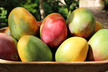
India: Breakthrough extends shelf life lychees
however, the Bhabha Atomic Research Centre (BARC) has developed a technology which considerably increases the shelf life of lychees, meaning they can be kept fresh for over a month.
"Lychees are highly perishable and have a non-climacteric nature. The colour of the fruit turns brown soon after harvest. Fruits also get spoiled soon after harvest due to physiological and microbiological changes. Though India is the second largest producer of lychee, a commercially viable technique was not available till now in India for its shelf life extension. Non-availability of a proper technique has been the biggest barrier for ambitious vendors involved in the trade of fruits. The irradiation technology developed by BARC offers a practical solution to the difficulties associated with lychee trade," says A K Sharma, head of the food technology division at BARC.
A "sequential surface chemical dip combination process" has been developed at BARC that will help retain the pinkish-red color of lychee fruit during prolonged storage (45 days) at low temperature (4ºC). The post-harvest browning of the fruit also does not occur after the treatment. It helps in retaining major color pigments and also kills microbes (bacteria, yeast and mold) present on the fruit. "All these changes result in quality maintenance of lychee during prolonged storage without adversely affecting its nutritional and sensory properties as the fruits are dip-treated with chemicals generally recognised as safe (GRAS). There are no harmful residues," explains Sharma.
Such a technology, says BARC, has major advantages as processed fruits are of high quality and have a very good export potential through sea and air routes. According to officials, there is tremendous industrial potential as many secondary products like juice, fruit jam, squash, custards, blends with ice-creams and beverage like wine, can be prepared.
"Longer shelf life can facilitate greater market coverage. A consumer can keep the processed-packed fruit in the refrigerator and consume it for over a month. The export will go up manifold as the lychee fruit will now be able to reach any part of the world. The entire procedure can also be scaled up as per the requirement, from small to industrial scale. Manpower requirement and energy consumption is very low. As costly instruments and technical expertise are not needed, it can be operated with minimum training," he says.
Source: www.indianexpress.com