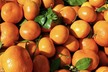
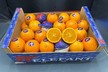
This year, due to climatological reasons, the ripening of Huelva's earliest mandarins has been delayed by almost a month, causing that production to overlap with that of later varieties, including the Clemenules, which is the most marketed in Spain.
Thus, although the first batches reached good prices, now we are going through some difficult times and the fruit is being sold very slowly, and not at the right price."
This was stated by the president of the Citrus Growers Association of the Province of Huelva (ACPH), Lorenzo Reyes, during the 3rd Citrus Forum of the Province of Huelva, which was organized for the third consecutive year by the Provincial Council and the National Association of Organic Producers (Ecovalia).
In spite of all this, Reyes highlighted the importance of Huelva's citrus fruits, especially the extra-early mandarins, whose production is the largest in Andalusia. In fact, their volume has reportedly already become greater than that of oranges, with 45% for the former and 45% for the latter and a total citrus production expected to reach 590,000 tons this campaign. The total acreage oscillates between 18,000 and 19,000 hectares.
Regarding the current situation and the future of citriculture, Reyes highlighted the current "uncertainty" in the sector, especially due to the entry of fruit from countries in the southern hemisphere, especially South Africa.
The president of the ACPH said that "one of the biggest problems, not only for the citrus industry, but for agriculture in general, is that in an increasingly globalized world, any product that stands out for its economic profitability quickly sees its production increase in other areas of the world. As a result, varieties that are already well established in the market end up enduring oversupply-related problems."
In the words of Reyes, this is a "cyclical" problem. "At times, a crop will offer a very interesting profitability, until its production increases and then it falls, forcing growers to be constantly updating and developing new varieties." This is an area in which Huelva has always stood out. "It has the capacity to react quickly, applying good cultivation techniques. Also, Huelva's climate allows its growers to always work with the most profitable varieties at all times."
Some of these are undoubtedly the extra-early varieties, which given the situation "are now overlapping with the second season productions from the southern hemisphere. Clearly, this fruit was much more interesting for Huelva from a financial standpoint when it was not imported from that part of the world."
Source: huelvainformacion.es