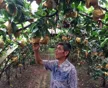
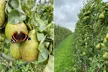
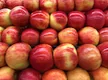
This year, Hungary's apple production is about 25 percent higher than the 10-year average, with a total of 730 thousand tons. Of this, 25 to 30 percent is intended for fresh consumption, while the other 70-75 percent will be processed, as reported last week by István Nagy, Minister of Agriculture.
He said that it is of the utmost importance for Hungarian apples to be better adapted to the needs of the market, as this would improve their competitiveness. It is also necessary to use quality technology, since this gives producers the ability to produce at a lower cost and in a more efficient manner.
He emphasized that the government supports health-conscious lifestyles, and to this end, it promotes the consumption of Hungarian vegetables and fruits, even from early childhood. In the School Fruit Program, apples are the most popular product.
Balázs Győrffy, President of the National Chamber of Agriculture (NAK), said that the apple harvest started 2-3 weeks earlier this year. Also, due to the drought period at the end of the summer, the size of the apples may be smaller, especially in places where it wasn't possible to irrigate, so the supply of apples for processing may be greater as a result.
For his part, Péter Ondré, Managing Director of the Agricultural marketing Center (AMC), pointed out that Hungary's apple consumption has halved compared to the average of 30 kilograms reached 15 years ago, and that about 30 percent of the Hungarian population does not consume fruit regularly. He also called on AMC to organize tastings in Budapest in the coming weeks to encourage consumption.
Lastly, István Hunyadi, Director of the Vegetables and Fruit Product Council (FruitVeb), explained that the acreage devoted to apples in Hungary amounts to about 27,000 hectares. He also pointed out that the largest area is in Szabolcs-Szatmár-Bereg County, where over 17 thousand hectares are devoted to the crop. Apples account for more than 30 percent of all fruit-producing areas.
The apple promotional campaign is being implemented through the cooperation of the Ministry of Agriculture (AM), the Agricultural Marketing Center (AMC), the National Chamber of Agriculture (NAK) and FruitVeb.
Source: napi.hu