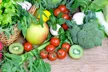
The sanctions enforced by the Government of Russia since August 2014, banning the import of different food products and raw materials from the European Union, have had a severe impact on Spain, where its consequences "continue to be observed," according to sources from the fruit and vegetable sector.
"The impact has been very serious and the consequences are still felt, as Russia is a natural market for Spanish fruit and vegetable products," said José María Pozancos, general director of the Spanish Federation of Fruit and Vegetable Exporter Associations (Fepex), in an interview with Sputnik.
According to data from the ICEX (Spanish Institute of Foreign Trade), up until August 2016 alone, the losses caused by the Russian sanctions amounted to 534 million Euro. The most affected sectors are the meat industry (with losses amounting to 262 million) and the fruit sector (188 million).
Sputnik contacted the ICEX to get more up-to-date statistics, but the institute claimed that no specific study on the impact of the sanctions has been carried out since 2016.
The director of Fepex recalls that "the Russian market absorbed approximately 600,000 tonnes of exports for the Spanish sector, taking both direct and indirect exports into account."
Although Fepex does not have exact data on the impact of the sanctions over the last four years, the association's impression is that they have been huge and generated "a great disturbance in the market," both directly and indirectly.
"Russia is a natural market for Spanish fruit because of its size, its purchasing power, the complementarity of the climates or the logistical facilities," says Pozancos.
After the introduction of the sanctions, some "alternative markets appeared which performed relatively well," such as Canada or Brazil, but Pozancos stresses that "these cannot fully replace the Russian market."
In his view, the impact is still visible in the Spanish market, especially because "there were companies whose productions were specifically intended to meet the demands of the Russian market."
Pozancos stresses that fruits and vegetables are "very perishable products, so their export to other countries is very complicated if they are too far away or if there are no adequate logistical connections."
In addition to the search for other markets, Pozancos recalls that, after the sanctions, producers had to resort to "withdrawal measures provided by the European Union, as well as aid from the Ministry of Agriculture of Spain for the transformation of the fruit into juice."
In short, all this had a "clearly negative impact on the fruit and vegetable sector, which had to look for ways out to more volatile markets, losing an estimated 10% of the total demand."
Source: Sputnik