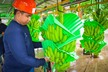
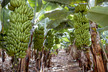
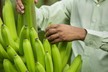
In 2017, world banana exports had grown to 20.5 million tons, or 10 percent more than in 2016. Ecuador was the biggest exporter, followed by Guatemala, Costa Rica, Columbia, with the Philippines on the fifth spot. These top five exporters account for 80 percent of total shipments. The Philippines is the leading producer of bananas in Asia. The banana industry has always been a source of pride and precious foreign exchange for the Philippines.
Last year, the Philippines exported around 1.6 million tons of bananas valued at about $700 million, despite the fact that this sector utilizes only 0.4 percent of the country’s total agricultural land (about 87,780 hectares). This is what being a high-value crop is all about.
The Philippine banana export industry is basically Mindanao-based. The biggest producers are Bukidnon, Davao, Cotabato, Sarangani, Sultan Kudarat, Agusan, Surigao del Sur, Maguindanao, and Lanao del Sur. Exports go to Japan, China, South Korea, United Arab Emirates, Iran, Iraq, Saudi Arabia, Hongkong, Kuwait, New Zealand and many other countries.
However, the reality is that exports of bananas have been dropping over the years. From 237 million boxes in 2011, the volume has gone down to 187 million boxes in 2016. This reduction of about 50 million boxes amounts to nearly $300 million in losses to Mindanao.
Even China’s purchases have gone up and down. From 22.2 million boxes in 2006, it went up to 51.8 million in 2011, then went down to 45.9 million in 2016. Meanwhile, its imports from Latin America increased from 0.5 million boxes in 2011 to 11.6 million in 2016.