Spanish fruit and vegetable stores estimate that vegetable consumption has dropped by 40% since prices started to soar after the cold snap.
This has been reported by the president of the National Federation of Fruit and Vegetable Retailers, Tino Mora, who confirmed that "there is no shortage of vegetables," but that the price increase due to "the lower supply has led fruit stores to adjust their margins to be able to continue reaching the consumer at a price as affordable as possible."
Alternatives to consumption of expensive vegetables
"The drop in consumption as a result of the expensive prices of some vegetables is also motivating consumers to look for alternatives and, for example, to replace courgettes with pumpkins when preparing a soup, since the latter's price has remained stable," he pointed out.
Mora, who is also the president of the Association of Fruit Growers in the province of Barcelona, has said he is confident that "within no more than 15 days, the situation will become normal again, both in terms of volume and prices, provided the weather does not stop the production again."
For example, he noted that a couple of days ago there was still no arugula in Mercabarna, as this normally comes from Italy. Also that there is little tomato on the vine and what there is is twice as expensive as normal for this time of year. The arrival of courgette shipments has brought the product's wholesale price down by about 80 cents/kg, after having stood at around 4 Euro/kg.
A punishment for retailers
The Association of Fruit and Vegetable Retailers of Madrid (Adefrutas) agrees with Mora in that "the consumption of vegetables has been reduced by an average of 40%" due to the higher prices and even though there is no shortage.
Adefrutas has listed some of the vegetables that have reached higher prices; these are aubergines, artichokes, courgettes, green beans, tomatoes, lettuce, broccoli, cucumbers, chard, cauliflowers and peppers.
"These days are turning out to be a real punishment for vegetable retailers. Difficulties in finding products in wholesale markets add to the struggle to sell them to the consumer at high prices," they said.
Reduced margins
For Adefrutas, "the strong rise of prices at origin has not directly affected consumers, since the traditional retail sector has had to cut its margins in order to keep its customers." And all this - they added - "at a time when certain vegetable seasons are at their peak."
Fruit growers in Madrid have confirmed that there is "alarm amongst consumers, who go to fruit stores keeping a close eye on the vegetable prices, and that when finding out about the rises they decide not to make their purchases."
Consumers are encouraged "to continue consuming vegetables, as they are healthy and quality products that, with or without a cold wave, are still cheaper than in other European countries, as well as being affordable compared to other foods."
Deceleration of price increases at wholesale markets
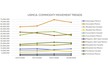
The rise of vegetable prices observed at Mercasa's wholesale market network has slowed down, but these are still high, with increases recorded by green beans, lettuce and tomatoes.
The latest Mercasa prices (27 January) set the maximum prices for artichokes (2.78 Euro/kg), cauliflower (2.36 Euro/kg) and green peppers (1.62 Euro/kg) in Mercamadrid; for green beans (5 Euro/kg) in Mercabarna; for tomatoes (2.15 Euro/kg) in Mercabilbao and for lettuce (0.97 Euro/kg) in Mercasevilla.
These prices are the same as those set on 24 January for artichokes, cauliflower and green peppers, but higher for green beans (with an increase of 0.5 Euro/kg), green tomatoes (+0.05 Euro/kg) and lettuce (+0.24 Euro/kg).
Lettuce and artichoke prices increased the most
At the start of the year (3 January), when horticultural crops had not yet suffered the consequences of the cold snap (which according to the producers has resulted in a 30% reduction of the supply), artichokes cost 1.40 Euro/kg at Mercamadrid, while cauliflower stood at 1.25 Euro/kg and green peppers at 1.45 Euro/kg.
In Mercabarna, the average price of green beans on 3 January stood at 2.85 Euro/kg; green tomatoes cost 1.55 Euro/kg in Mercabilbao, and lettuce reached 0.45 Euro/kg in Mercasevilla.
Comparing wholesale prices of 3 January with those of last Friday, 27 January, the highest price increases in January corresponded to lettuce (+115.55%) and artichoke (+98.57%), followed by cauliflower (+88.8%), green beans (+75.43%), green tomatoes (+38.70%) and green peppers (+11.72%).
Source: Efeagro