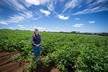
AHDB Potatoes’ Next Generation headed to see the science behind potato seeds on a two-day Scottish tour earlier this month. The group explored pre-basic minituber production on the first morning – the start of the process for the entire £4.8 billlion potato industry in Great Britain.
Virtually all seed potato stocks produced in Scotland originate from the in-vitro, pathogen-tested, microplant nuclear stock, maintained by SASA (Science and Advice for Scottish Agriculture), a Scottish government institution the group visited that same afternoon.
First up, the group were taken through the production processes at GenTech Propagation Ltd in Dundee, from initial splicing and microplant propagation, to minituber grading and bagging.
With only one seed grower in the group, Andrew Johnston of Albanwise Farming Ltd, the delegates welcomed the visit as an opportunity to learn more about the details of seed production:
“Even for me in my role, I had not seen the extent of the process prior to the commodity I’m involved in producing. The morning was a real eye-opener,” said Mr Johnston.
Speaking about the Next Generation visit, GenTech Manager Nigel Ebblewhite said: “We feel it’s important for all involved in the supply chain to gain a better understanding and awareness of the many steps involved in producing a humble potato.”
Heading next to the Scottish Government facility, the delegates were hosted by SASA’s export liaison officer, Jacqueline Gibson.
Mrs Gibson introduced them to the array of specialist services in place to preserve and ensure the high health status of Scottish seed potatoes.
Key members of the potato and plant health teams provided insights into potato DNA fingerprinting, variety collections and virology, before the group tried their hand at microplant cutting within a mock sterile setup.
AHDB-sponsored nematology Fellow, Dr Kim Davie, provided a close-up look at SASA’s advanced soil-testing systems which help keep Scottish seed land free of Potato Cyst Nematode (PCN).
The group concluded their tour with a demonstration of SASA's Seed Potato Universal Data System - a set of unified records tracking potato seed and production and associated health data across the country. Offering traceability and field history useful for planning rotations, it has also proved valuable to scientific research in areas such as disease outbreak distribution monitoring.
Source: farminguk.com