Last year, the Valley and much of the state of California, was still in the grip of a prolonged drought, and many farmers had pulled their citrus orchards. Chilling hours were down and many expected a reduced navel orange crop. The worst-case scenario never materialized.
“The crop just kept growing,” said Bob Blakely with California Citrus Mutual. The U.S. Department of Agriculture has placed last year’s navel orange crop at 88 million cartons, but Blakely said he thinks it was more like 90 or 92 million cartons.
This year’s crop is estimated to be smaller and Blakely said he feels that will be the case.
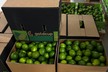
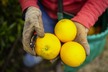
Harvest of navel oranges in Tulare County began last week, with the first of the fruit packed in Lindsay. Blakely said the crop is a little early, but the fruit must meet both flavor and color standards in order to be picked and some early varieties are doing that.
The estimate for this year is 84 million cartons being packed in California, with 81 million of those coming from the Central Valley, where Tulare County is the leading producer of citrus in the state. That estimate is 8 percent lower than last year’s harvest.
“The crop is down,” said Blakely, explaining, “It is not unusual to have a smaller crop after a big crop.”
Even though acreage is down, growers last season still saw a very high yield. Another thing that added to more cartons was that the fruit had good size. The larger the fruit, the fewer which can be placed in a carton, thus more cartons.
Alyssa Houtby, director of Public Affairs for CCM, said when trees are stressed they can sometimes produce more fruit and that may have occurred last year. The drought has stressed trees as growers scrambled to find water after no water was given farmers from the Friant-Kern Canal. Also, winters on average were warmer than in past years, not allowing trees to shut down as needed.
Because of the drought, many growers pulled their trees and, while many have replanted, those young trees won’t be bearing fruit for another three or four years.
Blakely said this year’s crop right now is a little smaller in size, but the warm afternoons and cool nights are helping to stimulate growth and bring on sugar and color.
Tulare County had 111,700 bearing acres of oranges in 2015, according to the Tulare County crop report, down from 117,500 acres in 2014. Of that, more than 72,000 acres were navels. The value of navels, valencias and mandarins was $1.1 billion, down from 1.2 billion in 2014.
The valencia crop, which is in its final days of harvest, will end up being about 11.5 million cartons in the Valley and 21 million cartons in the state. Blakely said it is a little more difficult to track the mandarin harvest, but the crop next year is expected to be about the same as it was last year.