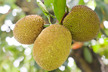
Trade barriers are one of the factors that have the greatest impact on developing countries producing raw materials and tropical fruit, according to FAO economist Mamoun Amrouk.
At the opening session of the Committee on Agricultural Commodities of the UN Organization for Food and Agriculture (FAO), Amrouk said that "public interventions are having an important role in the marketing of raw materials and tropical fruits."
He cited the export subsidies and the ban on overseas sales in some countries, as well as the increasing tariffs applied to imports as their value increases.
This discourages underdeveloped countries seeking to market more sophisticated products and to develop their industry, taking into account that the less processed raw materials still have relatively low tariffs.
According to Amrouk, the market distortions caused by public interventions are taking a toll on the development of commodity prices.
Moreover, the expert said there were concerns about other problems, such as the spread of pests in food, as has happened with citrus in the US and bananas in Asia.
In recent years, raw materials (including coffee, coconut and tea) have developed in a similar fashion as other commodities, and in the future they are also expected to be subject to relatively low and volatile prices in the international market.
The expert urged the international community to take coordinated action to boost the (traditionally inelastic) demand for those products, similar to that taken by the coffee and tea industry.
The tropical fruit market, meanwhile, is characterised by the high volatility of prices due to the products' seasonal nature. Noteworthy in this regard is the growth in the demand for mangoes over the last two years and the drop in pineapples sales and purchases.
Despite these developments, Amrouk stressed that a change in the prices of these materials has no automatic impact on the income of the growers.
Also, the current strength of the dollar, for example, is leading to the depreciation of certain local currencies, which affects both importing and exporting countries.
In 2014, the value of the world production of tropical fruits, sugar and raw materials, which contribute to the economies of many developing countries, was estimated at 255,000 million dollars (200,000 million Euro), while internationally its trade value is estimated at 75,000 million dollars (67,200 million Euro).
Source: EFE