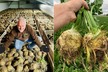
In Tanzania, when harvests fail, farmers commonly turn to cutting down forests to source wood for fuel or to make charcoal for a living- but growing mushrooms could be an alternative.
"I didn't know anything about growing mushrooms at home - we used to get them from the forest," 60-year-old Magdalena Gwasuma told the Thomson Reuters Foundation. "I didn't know growing mushrooms could be a way of making money."
Gwasuma, who lives near Babati town on the edge of the Nou forest in Tanzania's northern Manyara region, now realises she can make a living without cutting down the neighbouring trees.
Like many of her neighbours, Gwasuma has turned to growing oyster mushrooms to find new sources of income under a project run by Farm Africa, an international charity that works to reduce poverty in rural communities.
While mushrooms have traditionally been eaten in northern Tanzania, most farmers picked them from the wild and did not grow them commercially.
But Farm Africa is now teaching farmers to grow oyster mushrooms to reduce their reliance on growing crops and raising animals.
The project is part of wider government efforts to boost resilience to climate change by encouraging farmers to find other ways of earning money.
With funding from the European Union, Farm Africa has trained 700 farmers in mushroom cultivation, and hopes the model could be replicated elsewhere in Tanzania.