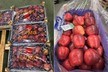
When it turned out that the cause of a listeriosis outbreak in 2014-15 was connected to some batches of commercially produced, packaged, whole caramel apples, the US' apple industry learned an important lesson. The listeria monocytogenes bacteria contributed to at least three of the seven deaths that were linked to the outbreak, according to the Centers for Disease Control and Prevention, and this had devastating effects on apple sales.
When the outbreak began, no one suspected apples. After all, fresh apples had never been linked to any major food safety outbreaks. Quite the contrary. According to a recent survey reported in The New York Times, 99 percent of members of the American Society for Nutrition and 96 percent of a representative sample of the American electorate consider apples and oranges as healthy.
Must be the caramel, was the first reaction when caramel apples were linked to the Listeria outbreak. But, no, to almost everyone’s surprise, the source of the problem turned out to be fresh apples from Bidart Bros. in California.
In addition the inspectors “observed direct food contact areas of packaging equipment used during the 2014 apple season, constructed and/or maintained in a manner that they cannot be properly cleaned.”
Subsequent research revealed the Listeria monocytogenes on the apples’ skins got pushed into their flesh when the sticks were inserted into them as part of the caramel apple production process. The caramel coating, in turn, sealed apple juice in between the skin and coating, providing a microenvironment where the Listeria could grow undisturbed.
Not surprisingly, repercussions rained down on the apple industry. Washington state was hit especially hard. It is the nation’s largest producer of apples, according to the U.S. Department of Agriculture, having produced 4,550 million pounds in 2010. In contrast, California produced only 115 million pounds that year. Of that comparatively small California volume, Bidart was not a major player. In other words, it was a relatively small orchard and packing house by industry standards.
Yet with inaccurate news about the outbreak running rampant through social media, some importers in Asia temporarily stopped buying U.S. apples altogether. Before it was over, the outbreak had gouged a $15 million hole in export sales for Washington state’s apples.
Bob Whitaker, chief science and technology officer for the Produce Marketing Association, described the situation as one of the industry’s “watershed moments,” saying that “everything is global now.”
But thanks to some concerted diligence in getting the correct information out to the right people, the spilled apple cart was finally righted, and export sales resumed. But the fresh fruit industry had learned an important lesson. It was going to have to hunker down and take a “whole-systems” approach to food safety. And that meant packing lines were going to come under even closer scrutiny than before.