There are hot peppers of every shape, colour and pungency. For some, eating them is a pleasure; for others, however, it represents an unbearable punishment. In any case, the consumption of spicy chillies continues to increase, with growth estimated at about 2.5 percent per year. The big secret behind them is capsaicin, which is the compound that causes irritation to many mammals. "It's what makes us secrete endorphins, the hormone of pleasure," states Pedro Gallardo, one of the promoters of the cultivation of the world's hottest commercially available peppers in the Guadalhorce Valley.
"Chillies are trendy. At present, there is a boom with everything related to spicy foods, especially in the United States and the United Kingdom, which together with China and Italy are the main consumers of this type of pepper in the world," he affirms.
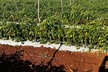
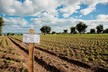
Gallardo and his partners are convinced that this is an activity that can be quite profitable. For this reason, last year they rented a plot in Cártama in which they conducted tests with a total of 39 varieties of chilli peppers from around the world to check their degree of adaptation to the area's soil and climatic conditions. "Most came from South America and Asia," he explains.
After that first test, Gallardo, who created the brand Mucho Macho together with his partners to sell both fresh and processed spicy chillies, produced seeds and selected 20 varieties, the ones that adapted best, in order to start growing them this year.
The company has set the target of reaching a production of about 40 tonnes during its first year. "We are negotiating with some owners of greenhouses in the area so they can also devote some space to this crop," assures Gallardo.
"We are planning to market fresh, dried and ground chilli peppers. We are also going to process spicy olive oils and market them nationally and internationally. Our goal is to sell the production both in bulk and in various formats under the brand Mucho Macho" he states.
He explains that Mucho Macho is an adventure for a group of young entrepreneurs. The idea is to produce environmentally sustainable and organic crops. In fact, they have already started the process to obtain an organic certification.
"We exclusively use nutrients and treatments authorised for organic farming. Our lands have been treated with fungi spores and beneficial bacteria for the substrate, with organic matter added also in order to regenerate the soil and prevent the proliferation of fungi," he says.
One of the varieties selected to be produced this year is the dreaded Carolina Reaper, current holder of the Guinness record for hottest chilli in the world, with more than 2,200,000 Scoville units (SHU).
The Scoville scale measures the pungency of chilli peppers. It consists of units of heat, i.e. the number of times a sample of dried chilli must be diluted in its own weight in sugar water before losing its pungency. Nowadays, laser chromatographs are used to measure the hotness.
Another super chilli they are considering growing, planted from April to May and productive from the second half of June up until November, are the Trinidad Moruga Scorpion, with 1,463,700 SHU, or the Bhut Jolokia or 'ghost chilli,' with more than 800,000 SHU.
The world's hottest
To get an idea of what this pungency is like, it suffices to know that spicy Padron peppers reach 2,500 SHU on the Scoville scale, while an Habanero chilli can reach 350,000. Pure capsaicin has 16,000,000 SHU.
"Although not yet tested, it is believed that the Guinness Record will soon be awarded to the Chocolate Bhutlah. We will also conduct tests with this variety in order to produce it," affirms Gallardo, for whom the spicy sector has proven very profitable. He illustrates this by mentioning that a kilo of Carolina Reaper chillies can reach a price of 180 Euro.
"It is very normal for an even spicier variety to appear every two or three years. There is a kind of competition among producers," he explains.
According to Gallardo, the handling of chillies is done with gloves, as they have suffered more than one accident after accidentally touching their eyes.
Source: diariosur.es