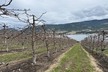
About 20 years ago, researchers began looking at different grape species to see which were most resistant to the Xylella fastidiosa bacteria that cause Pierce's disease. The University of California estimates Pierce’s disease (PD) costs the state $104 million per year, but with the development of new varieties, this could be reduced.
According to Andy Walker, Professor in the Department of Viticulture and Enology at the University of California, they found some forms of Vitis arizonica offered good resistance, which was controlled by a single gene.
“When we crossed vinifera – cultivated wine grapes and table grapes – to that source, they were fully resistant,” Walker says.
In the 20 years since then, researchers have been working to perfect these varieties. Walker says they’ve whittled it down from about 4,000 to 5,000 seedlings to just a handful of highly resistant plants. He adds that all the work has been done through classical breeding, so there’s no GMO component involved.
“We’re getting very close to release now,” Walker says. “We’ve got about five selections to start with, and then maybe another five that come over time.”
Commercialization is still way off; the varieties have to go through two campus committees, then Foundation Plant Services, which releases them to the nurseries. Those nurseries then have to decide if they want to grow them.
Some nurseries have already been actively supplying plant material to Texas and other areas in the south, where they anticipate a high demand.
“We’re considering a pre-release program where we get them into the nurseries before they’re fully ready to be commercialized, and then out from there,” Walker says. “We’re trying to optimize things as much as possible.”
Still, he estimates it will be at least two years and could be as many as five years before the varieties will be readily available to growers. “It will be a slow process,” he says.
Source: growingproduce.com