On Tuesday 15 March, Hong Kong's Consumer Council released their findings that out of 127 samples of vegetables, almost half had pesticide residues. A sample labelled organic from the mainland was also found to have pesticide residue levels exceeding the Maximum Residue Limit. The findings are a warning to consumers, who should not assume that all vegetables billed as organic are pesticide-free.
There is no law in Hong Kong defining and regulating organic vegetables. The council said the government should set up related regulations on vegetable labelling.
Among the 127 samples, 75 claimed to be organic, of which 28 were found to contain pesticide residue and 12 were found to contain heavy metals.
Among the non-organic vegetable samples, 31 had pesticide residue and six had heavy metals.
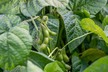
One French bean sample imported from the mainland was found to contain chlorpyrifos at a level of 0.03 milligrams per kilogram, exceeding the limit of 0.01mg.
The chemical is widely used to kill cockroaches, mosquitoes and flies, and may lead to acute food poisoning if consumed in large amounts within a short period of time, or hormone disruption if consumed over a long period.
One sample of purple sweet potato, also imported from the mainland, with “organic” printed on package, was found to contain 0.07 mg/kg of the same chemical, exceeding the limit of 0.05 mg for sweet potato.
One sample of flowering Chinese cabbage from the mainland was found to contain 0.1 mg/kg of cadmium, which is just at the upper limit.
In another organic carrot sample imported from the US, 0.09 mg/kg of cadmium was found. Long-term consumption of cadmium-rich food may cause kidney damage.
Source: scmp.com