Food waste is a problem for countries around the world. In the United States alone, up to 40 percent of all food ends up in the trash due to a variety of reasons, including consumer overpurchasing and retailer cosmetic concerns. But the produce industry is looking for ways to change those figures and make sure more food is ending up where it belongs -- on the plate. Among those on the cutting edge of food conservation is Radicle Farm, a private company changing the way we ship lettuce.

The idea came about in part while co-founder and Managing Director Christopher Washington was farming in West Africa. He saw a great deal of waste throughout the food-production chain. When he learned similar issues were being experienced by hydroponic farmers in the US, he and partner James Livengood started working on what became Radicle Farm.
“Food waste throughout the chain is far more than just what we throw out,” Washington shared. “We’re focused on how we can positively impact the food chain throughout the entire process, from the field to the port.”
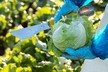
Right now the company is targeting the bagged lettuce market, where a third of all product is thrown away. Rather than harvesting and packaging their lettuce in plastic bags, Radicle Salads are grown in a greenhouse without pesticides, packaged in an open-air bag complete with roots so that the head of lettuce continues to grow. In fact, it keeps growing until it’s ready to be eaten, ensuring the leaves don’t go bad before it even makes it out of the supermarket.
“Our vision for the future is being able to go into a grocery store and harvest everything yourself,” Washington shared. Along with herbs and lettuce varieties, the company is currently experimenting with fruit trees. According to Washington, the company’s vision is for self-harvesting fresh produce in supermarkets.

Among the benefits Washington sees for retailers and consumers, one of the most significant is the local-farm-meets-mass-production model. Since they ship the day after harvesting and their shipping radius extends only 400 miles, the product offers the benefits of local produce. But the farm is able to produce significantly more than smaller scale operations. It also means the cost is competitive.
“Our model is local regional,” he says. “We’re a large farm. We can do about 75,000 products a month, and we have the capacity to increase that up to about 500,000 in about three weeks.”
Due to the company’s 400-mile shipping radius, which cuts carbon output and helps ensure the lettuce stays fresh while on the truck, Radicle Salads are only available in select East Coast locations. But according to Washington, plans are underway to set up farms that can serve the Midwest and West Coast in the next two years.
For more information:
Christopher Washington
Radicle Farm