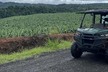
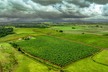
Banana Bunchy Top is the worst viral disease affecting bananas worldwide and in Australia is restricted to an area in northern NSW and South East Queensland. A major eradication of feral bananas on steep rainforest slopes above Doon Doon in the Tweed Valley has drastically reduced the chance of bunchy top infection in nearby commercial plantations.
Project leader David Peasley, a former program leader in tropical fruit research with the DPI who now operates his own consulting business, said his recollection of a hippy plantation in the scrub more than 20 years ago led his team to the site of infection, right up against the cliffs of the Mt Warning caldera.
It was the biggest find in the six years that the eradication program has been in operation.
Clumps of bananas had originally been planted higgelty-piggelty and over the years had been left to run riot, with rainforest overstorey and lantana understorey hiding the bananas from aerial view.
Mr Peasley said a well managed banana plantation on the northern side of Nightcap Range first showed signs of bunchy top infection last July and Mr Peasley’s team were left scratching their heads when the infection continued to turn up in the odd plant, despite infected individuals being poisoned.
The disease can only be spread either by transplanting infected suckers or by infected aphids which are carried in the wind.
“Our suspicions were confirmed when the plants were found and only a high cliff had stopped any considerable spread of the disease,” Mr Peasley said.
The new owner of the infected property is replanting the feral plantation with native species and removing invasive weeds, so readily agreed to the eradication team poisoning about 7500 bananas with glyphosate.
Where lantana and devil’s fig had not completely covered the plants the team was able to spray a biologically-approved paraffin-based pest oil to contain infected aphids.
As disease-carrying aphids are carried by prevailing winds, plantations further down the valley towards Uki and beyond could have succumbed to bunchy top, the original source of which may have come from the upper Wilson’s Creek on the eastern side of the caldera.
Source: goodfruitandvegetables.com.au