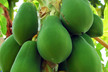
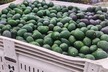
Cherimoyas, avocados and mangoes are tropical fruits produced in the coast of Granada and Malaga. They are very cost effective and generate plenty of labour. Europe buys everything it produces and there is potential for more. These crops have everything they need to expand, except for one thing: water.
They are currently irrigated with water from wells, with a very high cost, but this is an alternative that may soon not be available because the progressive lack of rainfall has resulted in wells becoming saline much more often. The solution lies in the dam of the municipality of Rules, which was built 12 years ago, but which still lacks pipes for the water's supply to people for irrigation purposes. It is currently just a huge pool, "enjoyed only by windsurfers," as growers say.
The authorities have been unable to finish this pharaonic work, which cost 270 million Euro, for it to be able to provide the service for which it was built.
Juan Pablo Camacho, member of the executive of COAG Granada and member of the Spanish Association of Subtropical Fruits, explains that subtropical crops, which concentrate in the Andalusian provinces of Granada and Malaga, are suffering a problem that is getting worse every year: lack of water for irrigation. The thing is that, "because of climate change, it is becoming hotter and there is also not as much rainfall, so the wells that have been used for irrigation, at a very high cost, have not been refilled with rain water and have become saline, making irrigation impossible." He explains that "it is no longer a matter of money; about the cost of water being higher or lower, about having to borrow from the bank; it is just not possible to work." The problem is so severe that this year producers had to irrigate their crops in shifts, because if everyone watered at the same time, the wells would become immediately saline. They have consequently been watering every 51 days. The result of this, together with the weather conditions this summer and autumn, with much more heat and low humidity, has been a reduction in the yield, "which is one third of what was achieved last year. There is little production and small sizes, despite the fruit's quality."
In Spain, cherimoyas, avocados and mangoes are grown almost exclusively in this area of Andalusia, although avocados are also produced to a lesser extent in the Canaries. These fruits are highly valued internationally and are exported almost exclusively to Europe, with the exception of cherimoyas, which remains in the domestic market. Juan Camacho says that, with the current production, "we will be very far from being able to supply the European market," so "it would be an excellent choice for business in the Spanish food industry if the conditions (i.e. water) were right to maintain the crops and significantly increase their production."
In this regard, the representative of COAG is sure that if enough water was available for the producers there would surely be an increase in the production of these crops which, he repeats, "are very profitable." This would not only generate wealth in the area, but also an estimated 10,000 new jobs, of which 6,000 would be permanent. In fact, it is estimated that, with the pipes of the Rules dam completed, the acreage could grow by up to 6,000 hectares.
Enrique Colilles, CEO of Trops, an Agrarian Transformation Society (SAT) which brings together 2,300 growers (almost 50% of those present in the area) and markets 60% of the mangoes and 40% of the avocados produced in Spain (29 million kilos and a turnover of 70 million Euro), is even more optimistic than Camacho about the good prospects that water would ensure for the production of these crops. "Production would double, which is now worth 200 million Euro, and between 10,000 and 15,000 permanent jobs would be created."
He considers the fact that the Rules dam is accumulating water and then dumping it as "outrageous," adding that such actions "explain why there is such unemployment in Spain." He gives another example. "In the area of Guadiaro, about 700 cubic hectometres of water are being dumped in the sea. With just 50 of them, we could double the sector's production and prevent it from being at risk."
Spain is currently the world's largest producer of cherimoyas, with a planted area of about 3,300 hectares, mainly in the coast of Granada, in the towns of Almuñécar, Jete, Motril, Salobreña and Otívar. Last year, production amounted to 50,000 tonnes.
As regards avocados, the fruit is currently the largest subtropical crop in terms of acreage, with approximately 11,000 hectares and a production of between 60,000 and 80,000 tonnes. Malaga is the leading grower, followed by Granada. Outside Andalusia, there is a small production in Valencia and the Canary Islands. According to Juan Camacho, the cultivation of avocados requires more water than cherimoyas, "making it even more difficult to produce in Granada's coast."
The harvest of avocados, whose cultivation generates more than one million wages per year, takes place from October to April.
Mangoes are another subtropical crop "that is gaining more ground every day," affirms Camacho. The planted acreage "already comes close to 4,500 hectares." The leading producer is Malaga's Axarquía region, but there has been a considerable increase in the acreage on the coast of Granada, despite the water shortage problems. The latest harvest came close to 20,000 tonnes. The harvesting period, depending on the variety, lasts from September to November and its cultivation generates 270,000 wages per year.
Source: eldiadecordoba.es