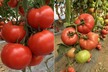
The summer season of fruits and vegetables from the plateaus and fields has finished. Growers are now waiting on the first produce from seedlings planted in the greenhouses one month ago.
In Antalya, the center of greenhouse production, with the arrival of winter, vegetable growing on the plateaus has finished. In the months of July, August and September vegetables grown in fields and on the plateaus occupied the market stalls, they now give their place up to greenhouse produce. In Antalya’s wholesale halls the first products are being ordered before they have even arrived.
The starting prices for produce in the wholesale halls are as follows: tomatoes cost, depending on variety, between €0.47-1.40, cucumbers €0.19, bell pepper €0.40, banana peppers €0.47, onions €0.37, potatoes €0.34, aubergine €0.31, green beans €0.93. For fruit: apples (golden) €0.56, local bananas €1.06, green grapes €0.87, black grapes €1.09, melon €0.50, grapefruit €0.50, plums €1.10.
The manager of Antalya wholesale hall Dilaver Demir explains that the Antalya region meets 50% of Turkey’s fruit and vegetable needs, but growers are expecting a more difficult greenhouse production period before it has even begun. Demir states that the prices could change before the first products have reached the markets, “The first taste, smell of the greenhouse products is something else. The first greenhouse products are especially desirable. There may be a slight increase in prices but if there is an excess of product the inverse will happen. Produce comes to the hall everyday but the same producer cannot send product everyday. Therefore there are difficulties in production, because it is difficult to reach the hall everyday, there are slight differences in the same variety of products.”
Demir also touches on climatic conditions in the region affecting prices in the short term, ”Heavy rainfall in coastal areas does not affect those engaged in production. The produce is currently seedlings. If heavy rainfall floods the greenhouses during the harvest period, then prices could partially be affected.”
Source: yenisafak.com