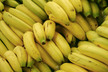
Already for many years there are clear surpluses in the agricultural production of bananas and tomatoes. Every year there is too much production, while the number of clients drops. To maintain high prices, the banana sector carries out what they call a "pica," which entails the destruction of excess fruit from the volume intended for export.
When it comes to tomatoes, the surplus is dumped, not only in the Canary Islands, but also in Almeria, which is the province with the world's largest greenhouse acreage. The grower Juan Cabeo said recently that "between two and three million kilos of tomatoes are dumped per day just in the province of Almeria."
What happens in the banana sector is no less apocalyptic. During the last quarter, some nine million kilos of the fruit have been dumped. To that volume we must add the 2,400 tonnes donated to the Food Bank. That is, the excess supply in the Canary Islands has amounted to more than 11,000 tonnes. How many thousands of tonnes more will be destroyed this year?
It is logical to think that if this Kafkaesque situation takes place every year it is because someone is paying the bill for this obvious economic and productive nonsense. The subsidies received by the EU banana sector and the tariffs imposed on the entry of bananas and plantains in the EU territory help maintain this artificial situation.
Luckily for the industry, bananas are the only agricultural product with a domestic production that stands far below demand in the EU market, which means significant imports from third countries are required. That makes it relatively easy for the subsidies of the Canarian fruit to be negotiated in Brussels and more difficult for tariffs to be maintained for the rest. But this, we should not forget, is at the expense of making European consumers pay more money for a kilo of bananas than they would have to if there was free competition.
Once again we see how subsidies distort both market and production, in this case of bananas and tomatoes, expanding the number of hectares planted, producing unneeded surpluses. Without going into very thorny issues of alleged local justice, it is clear that many are harmed for the benefit of a few thousand islanders; doubly harmed, actually, as on the one hand they have to pay more expensive prices for the fruit, and on the other, they are supporting such national and EU agricultural policies with their taxes.
To maintain our productions in a profitable and sustainable manner it is essential to find new ways of marketing and industrialization. The attempt to export bananas to Morocco, which failed due to the poor quality of the fruit shipped, as published recently, does not help the sector. And if this was the case, those responsible should be excluded by their peers because of the damage and distrust generated.
To make good use of these surpluses, if it was necessary to maintain the current production volumes, it would be very important for entrepreneurs to be willing to set up factories for the processing of banana-based products, as well as of other products facing the same issues.
It is surprising that the Canary Islands does not market banana jams, for example, or makes use of this product as an ingredient in local cuisine, besides dessert. New possibilities need to be explored.
Source: abc.es