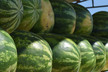
Following an analysis of watermelon prices in Hungary, which range between 80-90 HUF (0.26-0.29 Euro) in some areas of the country and 160-180 HUF (0.52-0.58 Euro) in markets of Budapest and other major cities, Ledó Ferenc, president of the country's Fruit and Vegetable Interprofessional Organization and Marketing Board (FruitVeB), stated that consumer habits are currently changing. "While in the past buyers demanded watermelons that were up to ten kilos heavier, those under five kilos are now much more popular. Producers also continue to ask consumers to buy only high-quality Hungarian produce instead of Greek imports."
For his part, Antal Gyula, head of the Fruit and Vegetable division at Syngenta Kft, pointed to the need to promote a brand for Hungarian watermelons so that consumers can easily identify the various products, as over the past twenty years Hungary has suffered a crisis in the production of vegetables due to difficulties in the marketing.
According to producers interviewed, the first stage of the domestic watermelon season has gone well, and how things will develop in the next harvest period will depend on the weather conditions. Harvest volumes are expected to reach 240 thousand tonnes, with a slightly greater acreage, compared to last year. For melons, the harvest is expected to reach 17,000 tonnes.
As far as consumption is concerned, Zsigó Róbert, of the department for food chain supervision of the Ministry of Agriculture, highlighted the success of a recent four-week campaign aimed at the promotion of melons and watermelons, which has resulted in "a twenty percent increase in consumption volumes."
Source: magyarhirlap.hu