The Spanish region of Aragon expects a normal fruit campaign, with a similar production volume as last year. Initial prospects point to harvest volumes reaching about 600 million kilos. Production remains stable due to the 4,000 additional hectares devoted to peaches and nectarines, while other varieties will register a significant decline due to the effects of frost or poor fruit setting. The fruit picking campaign, which has just started, is expected to generate some 15,000 contracts from May to October.
The sector is concerned about the Russian veto being maintained; as a result, agricultural organisations such as the Union of Growers and Ranchers (UAGA) have requested several measures, including the implementation of support for the withdrawal of the fruit for free distribution or juice production from the beginning of the campaign.
According to prospects issued last week by UAGA (largest organisation in the industry), the peach, nectarine and apple production will be similar to last year's. In the former's case, this is because of "the entry into production of young plantations," while apples, "which have encountered no problems with the setting," will reach similar volumes.
By contrast, cherries, apricots, pears and plums are likely to suffer significant declines. In the case of cherries, this is because "in areas like Bajo Cinca and Caspe they are already starting to harvest the early varieties, and both early and midseason cherries have not had a good setting, and thus a significant drop in volume is expected."
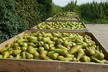
The same applies to pears, with production dropping by around 20% due to problems with the setting. Meanwhile, plum and apricot volumes will decrease due to the impact of spring frosts and poor fruit setting.
Aragon's cherry harvest will be reduced by 40% compared to last year, when production was really good. Prospects also point to a 20% smaller apricot and pear harvest and for peach and nectarine volumes to remain stable.
Overall, growers expect to maintain the 600 million kilos of fruit harvested last year, since the acreage has expanded.
According to the head of fruits and vegetables at UAGA, Vicente López, "the campaign will be similar to last year's in terms of volume, despite the fact that the production potential could have been a bit higher due to the increase in the acreage for some fruits, such as peaches and nectarines."
The hiring of labourers during the campaign will also be similar to last year's, with about 15,000 temporary workers, although the pace at the start is expected to be slow.
About 50% of the fruit produced in Aragon is intended for other markets. One of the major destinations was Russia, so after the entry into force of the Russian veto in August last year, growers were forced to look for alternative markets, explains Vicente López.
Among these new markets he mentioned China, Arab countries like Qatar and Kuwait, countries in North Africa, like Morocco and Algeria, in America, such as Brazil and the United States, and a little in South Africa. Sales in countries of the European Union have also intensified.
Nevertheless, growers are looking forward to the end of the Russian veto, since Russia is a country that offers great opportunities to sell the fruit. For the time being, they have requested compensation measures to come into force as soon as possible.
Fruit producers warn that after three very bad years, with crises such as that of the E. coli in Germany, the Russian ban or the impact of hail, some farms may be forced to disappear if problems continue. As long as there are no unexpected problems with the weather, the production could reach a value of 840 million Euro.
Source: Valencia Fruits