While in Galicia, unlike in large plantations of other regions, most products planted are intended for own consumption, the case is different for organic farming. In this sense, many Galician farms have identified the business opportunity of offering a quality, differentiated product, and this has in fact become the only niche in the primary sector that has registered a steady growth over the last decade, even during the financial crisis.
The demand for organic crops has increased to the extent that production volumes have multiplied six fold over the past decade. The volume of business generated by certified organic products has gone from just five million in 2004 to 31.2 million last year, as recorded by the Regulatory Council Ecolóxica da Agricultura (Craega) in its annual report. Only last year it grew by more than 20%.
In relative terms, cereals were the food group losing the most ground, with a 48% decline in sales. To a lesser extent, oil, vegetables and fruits were also victims of the crisis and producers devoted to these plantations noted drops in their income of between 5% and 13%. On the other side of the scale, the products that worked best last year were those derived from aquaculture and seaweed collection, whose business volumes tripled. Tubers and feed also closed a great 2014, after doubling the turnover generated.
Despite the growing popularity of chemical-free products, the acreage devoted to organic farming actually decreased by 2.7% last year, going from 15670 to 15230 hectares. This is mostly the result of the reduction of more than 500 hectares in La Coruña and of 86 in Pontevedra. The figures are offset by increases in the Galician inland, with Lugo registering 119 more hectares and Orense almost 38. Both provinces are also the ones with the largest certified acreage, with seven million hectares in the former and six million in the latter. In La Coruña and Pontevedra, the acreage devoted to organic farming barely exceeds one million in both cases. In any case, there are 2,338 hectares more than before the start of the crisis, and 8,500 more than ten years ago, i.e. more than double.
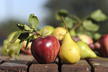
Eight out of ten hectares are not intended for actual crops, but for grassland or forest areas. The permanent crops (apples, pears, peaches, raspberries, walnuts, chestnuts, figs, kiwis, vineyards and olives) take 1,301 hectares, of which 74% are reserved for nuts. Despite the fact that tubers in areas such as Coristanco or Xinzo de Limia are a staple for quality and all of the growers responsible have a Protected Geographical Indication, chemical-free potatoes are only planted on six hectares in the entire region.
In addition to the 20% increase in revenue, the reduction in the number of certified farms in 2014 has not prevented a growth in the number of operators involved in organic farming. At the end of last year a total of 703 were registered, which includes 554 producers and 149 processors, compared to the 656 of 2013; 510 in 2008 and 342 in 2004.
Source: laopinioncoruna.es