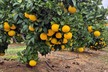
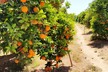
The Government of Galicia has confirmed the presence of the Trioza erytreae, a small African insect called psyllid, which causes the deterioration of citrus, and has been detected in part of the coastline of southern Galicia. The authorities have also explained the measures needed to combat it. Kiwis, mandarins, lemons, grapefruit and oranges are the main products that can be damaged by the pest.
The Galician government has asked citrus plantation owners to check their trees and, if found to be affected (symptoms are very clear, with clearly visible blisters on the leaves), to report it immediately to the authorities of the Rural Environment Council. They are also demanding citrus farms to implement the mandatory phytosanitary measures.
Environmental agents also asked all traders selling plants of the Rutaceae family, both ornamental and for fruit production, to ensure that the plant includes the necessary phytosanitary certificate, and in case the pest is detected, for it to be notified urgently to the provincial plant health services.
The Government of Galicia also notes that the presence of the psyllid is quite focused on two points of the Galician geography, although it doesn't rule out the possibility of it having gone unnoticed in other areas, since citrus plantations in Galicia are generally not very large.
The African psyllid was first described in 1918, but up until now, the insect had never been detected in Europe.
Source: www.lavozdegalicia.es