Italy: Negative import-export for fruit, veg
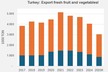
The negative amounts set the balance between import and exports at -694 million euros (-7,2%) and a declared decrease of prices on international markets of almost 7%. Between January and October Italy exported goods for about 3,3 billion euros (3,2 tonnes) and purchased goods from abroad for almost 4 billion euros.
Amongst the causes of this trend is the excess of fruit created by the “engulfment” of markets in consequence of the Russian embargo which caused products destined to Moscow to land on the national market and the drop of prices which Italian operators mark as “history”, tracing a line between before and after in the evolution of the Italian fruit and vegetables sector. “What makes us less competitive – explains Giaco Suglia, vice president of Fruitimprese – than European exporters such as France, Spain or Greece, is linked to production costs which are higher than those of other competitors, of 20% on average. Anything fits in the box: from the price of gas to bureaucracy, to all the costs that a farming company in Italy has to pay and that in such difficult times can't be covered with sales”.
The production registers increases for fresh fruit (7%), citrus (4,4%) and dried fruit (17,9%), with a slightly negative trend for vegetables (-0,9%). The negative trend is generally marked by all productions with the exception of dried fruit with registered a +37,7% against the -6,9% of vegetables, the -6,4% of citrus and the -3,2% of fresh fruit. “The increase reported by dried fruit – continues Suglia – is linked to the euro-dollar relation since the first materials come from abroad. But it also lined to the change in food habits that, right now, favour this kind of product”.
The negative results marked by the orange campaign are also to be due to the lack of organisation in the sector, as well as to the effects of the Russian embargo on national markets which worsened structural problems of the production chain.
Source: greenmed.eu