Nurseries use technology to meet walnut demand
Instead, they will originate in a sterilized laboratory, nurtured from a slurry called a "media" — a primordial ooze-type of substance containing sugar, salt, hormones and nutrients.
The varieties are cloned from a mother tissue developed by researchers at the University of California-Davis and cultured in a lab.
They are a hybrid of the best of the best walnut stock, capable of growing in lower grades of soil where walnuts could traditionally find no purchase.
Now they're helping fuel the explosion of walnut orchards in Yuba-Sutter, said Ranveer Tumber, owner of Golden Roots Nursery in Yuba City.
The demand for nuts has never been higher. Fuelled by global demand, the commodity's prices have surged. But those trees need to start somewhere, and the nursery industry has ridden the wave of demand for nut crops to expand operations and invest in expensive, but cutting edge, technologies like tissue culture cloning.
"With tissue culture cloning becoming a more accepted practice, production and demand are at an all-time high," Tumber said.
The nursery industry has increased in value each of the past four years, rising from $13 million in 2010 to $25 million in 2013 in Sutter County.
At Sierra Gold Nurseries on the outskirts of Yuba City, about two to three million nut crop trees are grown each year, via both conventional methods and tissue culture cloning. The nursery supplies farms throughout the state with almonds, pistachios and walnuts.
Historically, the nursery industry was feast or famine. It shrank and swelled with the rise and fall of the commodity prices. But in the past five to eight years, the demand has stabilized. More countries are able to afford higher-end food products, such as nuts, and commodity prices have steadily increased, said Jack Poukish, Sierra Gold president.
"It's the nut crops that drive everything now," Poukish said.
Now, his business is expanding. The nursery employed about 400 people this season — an all-time high.
"I used to think 200 people was a lot of employees," Poukish said.
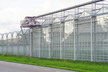
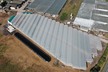
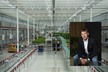
The nursery is building new greenhouses to acclimate their tissue-cultured trees from the sterilized laboratory to the real world.
"We're crunched for space," Poukish said. "There will be lots of new greenhouses for us in the foreseeable future."
It's staggering to imagine a nursery struggling for space when one section of a greenhouse can easily hold more than 30,000 young trees. But Poukish doesn't see the demand slacking, even with the drought.
"There are a lot of growers up and down the state that do not have water, and that's affecting their ability to develop orchards, but the demand is still strong," Poukish said. "The folks that do have water want to plant even more."
Source: appeal-democrat.com