Drones waiting in the wings to come into orchards and vineyards
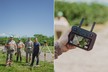
It could take pictures in your orchard and send them to you, nearly a half mile away, using the same kind of WiFi system that hooks you up to the Internet while you’re in the coffee shop.
Researchers from at least four universities are studying agricultural applications. Ken Giles at the University of California-Davis is working with a fixed wing model in grape vineyard applications, the only fruit-related effort under way. Washington State University is studying the use of UAVs for chasing away birds.
To many farmers, a call for government regulation may seem like asking for trouble. But that’s what the UAV industry is doing. It’s seeking to be integrated into the airspace.
The potential benefits for UAS (Unmanned Aircraft Systems) should not be underestimated, said Michael Toscano, president for the Association for Unmanned Vehicle Systems International. “Whether it is helping farmers improve crop yields, assisting first responders with search and rescue missions, or advancing scientific research, UAS are capable of saving time, saving money and, most importantly, saving lives.”
In an economic impact study, the organization estimated that this new industry will create more than 100,000 jobs and $82 billion in economic impact during the first decade following integration into the airspace.
Fruit applications
Bruce Prenguber, an independent agricultural economics consultant at Globalwise in Vancouver, Washington, said that “many people are speaking highly of the technology as the new big tool in agriculture.”
Applications in tree fruits and grapes might include scouting orchards—looking for outbreaks of insects or diseases, scaring off birds attacking fruit, locating wildlife damaging trees or posing a food safety threat, monitoring irrigation equipment, and doing early estimates of fruit yields. They could be used for precision spraying of small areas or for spreading pollen during bloom.
Prenguber says it’ll probably be companies and consultants, rather than farmers themselves, who develop the systems and programs that will be used in orchards and vineyards. Like apps for smartphones, programs will be developed, but they will need to be quite sophisticated. “Ultimately,” he said, “data systems will be established to record data for each individual tree and metered space of trees grown in high-density hedgerows.”
One of the exciting things about UAVs is that they can be programmed to fly in patterns, and they can fly the same pattern repeatedly. They can do things like the row crops people are doing with precision agriculture, putting the right kind and amount of fertilizer in an area based on yield potential or crop load, for example.
With the right interpretation of data, fruit crop size could be measured repeatedly from bloom on and the information used to schedule bins and pickers in the right amount to various orchard blocks and estimate crop value based on supply and condition.
The fixed-wing aircraft UAVs fly faster, but the helicopters are more capable of getting close and homing in. A good camera could focus on a single apple or a single insect monitoring trap, and a good wireless transmitter could send a closeup picture to a computer screen in the office.
Source: goodfruit.com