Evolution of tomato sizes (Photo: Chinese Academy of Agricultural Sciences)
Every time you eat a piece of tomato in a salad, you're placing a piece of human history in your mouth, the result of the efforts of thousands of growers to obtain a bigger and tastier food product. The history of tomatoes goes back to some undetermined point about 10,000 years ago, when the first men took a small wild fruit and started cultivating it in the American continent. When the Spaniards arrived to the new land, they found one of the possible ancestors of this fruit, in which the Aztecs saw the shape of a navel (in their language, Xitomatl means "fruit with navel") and brought it to Europe. Five hundred years later, approximately 162 million tonnes of tomatoes are produced in the world every year, with a value of 40,000 million Euro and dozens of varieties consumed by all cultures.
But, how has artificial selection influenced what we now know as tomatoes? Sanwen Huang's team, of the Chinese Academy of Agricultural Sciences, has published on Nature Genetics what is the first comprehensive analysis of the tomato genome (Solanum lycopersicum) in search of the changes introduced by hundreds of generations of growers. For their study, researchers have sequenced the genome of 360 varieties of tomato plants worldwide, including wild and domesticated species, and found that changes occurred in two very distinct stages: during the plant's domestication and with the improvement of its properties.
Huang and his team have identified a group of tomatoes that are sort of an intermediary between the original wild fruits and those sold commercially today. As explained in Nature, this group would have been domesticated, but not gone through the additional process of improving weight and size. According to their analysis, about 8% of the tomato genome was modified during domestication and 7% in the subsequent stage of improvement. The result, they add, is a modern tomato "100 times larger than its ancestor."
At the same time, this improvement has had a negative consequence: a reduction in the genetic variety of tomatoes, which limits the ability of growers to combine varieties. A very important stage in the changes introduced into the genome by growers occurred much more recently (from the 70s of the 20th century) and it was the combination of features of different species through a process called introgression. Some genes that were resistant to viruses or nematodes, for example, prevailed in modern commercial tomatoes since the earliest stages, which prevented the crops from being lost.
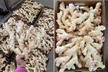
Existing tomato varieties (Photo: Chinese Academy of Agricultural Sciences)
All these changes, from domestication and improvement to introgression variations, take, according to the study's authors, about 25% of the tomato genome; the footprint of hundreds of generations in search of a better fruit. These same efforts, researchers say, are the same that now limit recombination of genes and species, so that laboratory research may be essential.
For José Miguel Mulet, biotechnology professor at the Polytechnic University of Valencia, the results of this study indicate that "China is making strides in molecular biology and has taken the lead in the world." To establish an analogy, he explains that if the tomato genome was an unexplored path, we would have managed to put signs through classical breeding, but these developments are "like having a GPS," so we know exactly what the coordinates are for the tomato genome. "This will allow us," concludes Mulet, "to carry out guided genetic improvements, i.e., knowing what genes we want to boost and which we want to silence."
Reference: Genomic analyses provide insights into the history of tomato breeding (Nature Genetics) DOI: 10.1038/ng. 3117
Source: http://vozpopuli.com