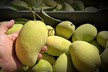
Could gac be the next new super fruit?
Bangalore's climate is quite suitable for most fruits and plants, but for the first time, the city's weather conditions have proved ideal for growing gac (Momordica cochinchinensis). Researchers at Sami Labs in Bangalore have found that the fruit not only grows well in the city's climate, but is also less vulnerable to pests and can be commercially viable. Muhammed Majeed, founder and managing director, Sami Labs, who has been conducting research on this fruit for more than a year, said: "I came across this fruit during one of my trips to Vietnam where children are fed this fruit, along with rice, to increase the vitamin A levels in their bodies. I wanted to grow it back home, so I brought some seeds back with me. We started growing the plant in our lab in Salem about a year ago and in the process we discovered that it takes a very short time to grow and start giving fruits."
Majeed said the seed takes only six months to grow into a fruit-bearing plant. "Since the plant is vine-like, it needs support. But when support is given, it takes just six months to grow and bear fruits. Once planted, the gac vine can last for more than 15 years with proper maintenance." The fruit is rich in carotenoids such as lycopene and beta-carotene that are known to have anti-cancer properties. These carotenoids are antioxidants and studies have shown that they provide cardiovascular support and also reduce the risk of developing osteoporosis. At the moment, gac holds the record for having the largest concentration of lycopene, which is 2,000-2,300 micrograms per gram of the fruit.
Cousin of the pumpkin
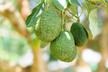
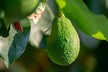
The plant belongs to the cucurbitaceae family of plants, which is also home to other fruits/vegetables such as the pumpkin, watermelon, and cucumber. While the fruits of the plant are commonly called baby jackfruit and cochinchin gourd, they are non-pungent and have a neutral taste. "The fruit is hard on the outside, but once it's cut, it reveals a soft and squishy pulp inside, covering its large seeds. Since it does not have a flavour of its own, it can be cooked with anything. We are looking into the peels of the fruit as well as the plant for any other revealing properties that it might possess," said Majeed.
Majeed also explained how the plant is almost a non-fussy grower in the city's climate. He said, "We have to water the plant every day at our lab in Salem, but here in Bangalore, it can be watered once in three days. We are working to make it cultivable by anyone who has a small piece of land because it can prove to be a viable cash crop."
The vines can grow up to six feet in height, provided they have support. If not plucked in time, the fruits can wither away while attached to the plant. "We have observed that it does not attract any kind of known pest because we have taken utmost care to grow it naturally without the use of any kind of chemicals or pesticides," added Majeed.
Healthful punch
Gac is known to have high concentrations of lycopene and beta-carotene that have numerous health benefits. These carotenoids have been studied to prove that they have anti-cancer properties, reduce chances of benign prostatic hyperplasia (BPH), and provide cardiovascular support. These carotenoids are antioxidants as well and are known to reduce the chances of osteoporosis and male infertility, and add glow to the skin. Beta-carotene boosts memory too.
Nutritionist Ryan Fernando said, "Lycopene has anticancer properties and studies have shown that it also helps asthma patients. Beta-carotene is the most naturally available form of vitamin A but as a nutritionist what interests me the most is the fact that this fruit is neutral in taste and smell. Often children do not like to eat certain fruits and vegetables because of their varying tastes which they might not like. But I think this fruit can be camouflaged in smoothies, milkshakes and even sandwiches. The bioavailability of lycopene increases in ketchup or paste forms so maybe the researchers can look into that as well."
Source: bangaloremirror.com