US (SC): Using science to grow better strawberries
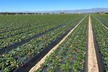
A good example of that intense management can be seen on the Waller Family Farm in Durham, NC. Mark Waller farms 40 acres of strawberries on what used to be a tobacco farm. Customers can pick their own strawberries or visit the market he runs during the strawberry season, which lasts anywhere from April through June.
“Once we see about eight to ten blooms per plant, we really pick up the intensity around the farm,” said Waller. “Not only are we fertilizing but we are also really watching for frost.”
And that’s where North Carolina State University Professor Emeritus Barclay Poling’s research comes in.
“If it’s really humid, with ‘lots of moisture in the air’ type of night, we can get frost or ice crystals on the bloom and we’ve killed blossoms as high as 31 degrees, which is really interesting,” explained Poling. “If it’s a dry night, with a low dew point, in those conditions the flowers can super cool to as low as 27, so that’s quite a range.”
Poling has found the average critical temperature for strawberry blooms in the state is 28 degrees. If the blooms get much colder than that, they will either stay dormant and wait for warmer weather or possibly die if the cold persists. Because the blooms are the most vulnerable tissue for the strawberry plant, and the most critical to a successful harvest, Poling compiles a wealth of weather information into an alert system to warn farmers of significant weather events during the all-important spring growing season.
And a key tool in this “nurture versus nature” battle is a new type of handheld digital thermometer, which Poling helped develop. Electrodes at one end of a wire are inserted into the strawberry blossoms while the other end of the wire is connected to a digital thermometer. The device reads the temperature of the strawberry blossom. Farmers use those readings together with the weather forecast to decide whether to cover the crops or irrigate them to protect from frost.
And it’s not just protection from the cold: the handheld thermometer is also helpful as the weather gets warm. If the strawberry blossom temperature gets too high, the farmer needs to increase irrigation to cool the plants.
The reality is that for all of the help science has provided to strawberry farmers, Mother Nature is still full of surprises and challenges.
Source: science.kqed.org