AU: A mixed Asian outlook for veg
John Lloyd, CEO, Horticulture Australia Limited (HAL), spoke frankly on his topic of “a rational future”. He said Australia’s fresh produce industry risks being too reliant on its sustainable and environmental credentials. He said the country’s clean, green image was just a ticket to the party but did not guarantee secure markets.
“We are not and never will be the food bowl of Asia,” Mr Lloyd said. “I don’t think Australia has the edge in research and development as it used to.”
His comments were further backed up by Federal Agriculture Minister Barnaby Joyce in his keynote address. “The idea we will be the food basket of Asia is bunkum,” Mr Joyce said.
Having said that, he pointed out opportunities still existed but Australia wasn’t the only country investing and promoting its green image.
“It’s all about getting a fair price back to growers at the farm gate,” he said.
International micro-vegetable grower and marketing expert Rob Baan, CEO, Koppert Cress, Netherlands, put it bluntly to the growers at the convention. “You in Australia are good producers but you’re not good exporters. Sorry,” he said.
He said growers worldwide needed to re-think food production and how it is valued.
Independent South Australian Nick Xenophon addressed the conference and was more optimistic about exports. “Our clean, green production is what we must capitalise on,” he said. “When it comes to biosecurity, we need a better, tougher political way to protect our growers.
He also said Australia needed to address the supermarket duopoly once and for all.
The comments cautioning against placing too much faith in Asian markets stood in contrast to research funded by HAL into vegetable potential in China.
Bill Morgan, managing director and Caspar Wright, business consulting and quantitative director, Cognition Research, delivered data from that research suggesting a targeted approach was important, perhaps in three major cities - Shanghai, Beijing and Guangzhou.
They said these cities have 58 million people who consume 5 million tonnes of vegetables per year. In comparison, Australia consumes about 4 million tonnes.
Again, the green and clean image came to the fore with the research information showing Chinese consumers would be willing to spend more on Aussie produce.
Mr Morgan said affluent Chinese buyers are concerned about the health of their local vegetables and therefore enticed to pay more for quality-guaranteed items. “Chinese consumers think that standard Australian produce would be as good as organic Chinese product,” Mr Morgan said.
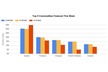
It was traditional lines from Australia such as carrots, potatoes and broccoli that were in demand, as opposed to specialist lines, according to the Cognition Research.
He said the issue of market access was an ambiguous one.
Source: queenslandcountrylife.com.au