A month after Narendra Modi was elected as India's Prime Minister, a number of economic policies have already been introduced. The country's economic growth has stayed below 5% over a year and this is too low to bring millions of people out of poverty.
Price controls on food
The core inflation reached 8.3% in May; 0.3 percentage points lower than in April, but food inflation stands at around 10%. This is especially true for vegetables and fruits, which are pushing prices to even higher levels.
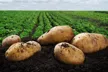
Potato prices increased by 19% in May, while onions, which are very popular in Indian cuisine, rose by about 60%; this has continued in June, with a price increase of 22% for onions, according to The Hindu Business Line.
"This has become a recurring problem in recent years; only when the government manages to control food inflation will they be able to reduce the core inflation," says Indian economist Rahul Bajoria, of Barclays.
Wholesale inflation in May was the highest this year. The authorities have responded by introducing temporary price controls and restrictions on exports of certain products.
Necessary Evil
Poor logistics, distribution and corruption are among the reasons for the high prices. It is often easier for agricultural producers to export products from India to other countries than to ship the products to consumers in other regions of the country.
Vegetables often rot before reaching markets and consumers, pushing prices to even higher levels.
"From a current perspective, these measures are a necessary evil. Export restrictions are an appropriate response to maintain stocks and ensure sufficient food supplies," says market economist Vishnu Nathan, of Mizuho Corporate Bank.
Fearing bad monsoon
This year's rainy season arrived in Mumbai last weekend. In the central regions and in northern India, 60% less rainfall than normal has been registered.
"This could be a disaster for growers. We have prepared contingency plans and we are in contact with universities," says director Ramesh Chand, of the National Centre for Agricultural Economics and Policy Research at the Times of India.
There is a 70% probability that the weather phenomenon El Nino will result in higher temperatures in the Pacific Ocean.
The prospect of low rainfall during the summer season is a concern for the economy. Food production is mostly dependent on rain in July.
Source: dn.no