Could this be the last productive season for Florida citrus growers?
The disease is wreaking havoc on citrus production in Florida and around the world. Florida's $9 billion citrus industry employs 75,000 people statewide — jobs which could disappear in the years to come if the disease is not beaten.
According to a June citrus production forecast from the U.S. Department of Agriculture's National Agricultural Statistics Service, the 2013-14 season is expected to yield only 104.3 million boxes of Florida oranges, compared to 133.6 million in the 2012-13 season, a drop of 28 percent.
Last year's season was already historically low; for example, 146.7 million boxes were produced during the 2011-12 season. A box is defined as 90 pounds of oranges.
If the estimate holds true, Florida will have its smallest orange harvest since the freeze-affected 1984-85 season, when 103.9 million boxes were produced.
Volusia County's small citrus industry produced only 176,000 boxes of citrus during 2012-13 on 825 acres of groves. In total, there are 524,640 acres of commercial citrus groves in the state, of which Volusia's groves account for less than one-sixth of 1 percent.
The supply crunch is driving up both wholesale and retail prices for orange products — one small silver lining for growers.
“Throughout the state, the numbers are down,” said David Griffis, director of the University of Florida Institute of Food and Agricultural Sciences' Volusia County extension office in DeLand. “We only have a few growers left (in Volusia County) who sell commercially.”
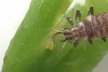
While a cure is still far off, according to Griffis, some advances in research have been made. In recent months, researchers have mapped out the genome of the bacteria that causes the disease and have been experimenting with a beneficial wasp that preys on the psylids that spread it.
On Wednesday, UF announced that a duo of its researchers had some success with using a combination of chemicals that can stop the bacteria in the lab, an achievement a press release calls “the first step in a years-long process to bring a treatment to market.”
Earlier this year, federal lawmakers set aside $125 million over the next five years for research into the disease as part of a comprehensive farm bill. Some $9 million in funding was also allocated in Florida's 2014-15 budget.
The dire situation in the citrus industry is causing some growers to sell their groves. In a sign of the times, a 35-acre grove on Jacobs Road in DeLand is up for sale for development as a residential subdivision.
“This property, the location of it, makes it desirable for development and the different diseases affecting the citrus groves are just taking their toll dramatically,” said Realtor Terita Hagstrom with The Baumgartner Co. in DeLand.
She said with the recent rebound of the real estate market, a lot of vacant and old agricultural land is beginning to be sold for development.
Hagstrom, who is related to the notable Northwest Volusia farming family of the same name, said growers are beginning to see the writing on the wall as diseases like citrus greening continue to wreak havoc on their crops.
“It's very hard,” she said. “It just seems like our citrus industry is on the way to demise, unless they are able to come up with something scientifically that can create something that is resistant to this disease.”
Source: news-journalonline.com