Based in the region of Ribera Alta, in the Valencian municipality of Algemesi, Spain, the company Peiró Camaró, founded by Antonio Peiró Pastor in 1922, is devoted to the production and marketing of oranges and clementines. It markets up to 35 million kilos per year and owns over 300 hectares of plantations.
In an interview with FreshPlaza, Alejandro Peiró, current manager of the company, reviews the current situation of the Spanish citrus sector, which is being affected by quality problems.
Aerial view of Peiró Camaró S.L.'s warehouse
Mandarins, clementines and oranges are not up to their usual standard, neither in colour or size, as a result of an excessively warm autumn.
"In spite of this, the campaign has been reasonable for clementines in terms of quality and prices," he explains. "Additionally, the competition we are facing from Morocco is not so strong, as their calibres are even smaller, and they have decided to focus on Eastern Europe."
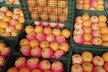
Employees packing clementines in boxes under the brand "Meine Süsse"
Oranges are the most affected by quality issues, as calibres have mostly been small and some have shown signs of splitting. "There is nothing we can do to prevent this situation, which has obviously taken it's toll on prices. We have had a disastrous orange campaign so far," explains Alejandro.
Andalusia's acreage grows, while Valencia keeps reducing it
Meanwhile, in southern Spain, despite last season's bad results, the current campaign has arrived without any quality problems. Andalusia's production volumes keep growing every year, and this season they were 21% greater than the average from the past four campaigns, according to the Council of Agriculture.
Exactly the opposite of what is happening in Valencia, where an increasing number of growers are switching to other crops, like kakis or kiwis, as a result of the poor profitability of citrus. This is forcing many Valencian firms to look for suppliers in Andalusia.
"This is not a damaging situation for Valencian exporters, because as our region's citrus production keeps falling, supply and demand could balance themselves out in about four years, as prices are currently being set by distributors," states Alejandro.
"Distribution chains should cooperate more with suppliers"
Alejandro expects distributors "to cooperate more with suppliers in the coming years and start treating them like partners, as many suppliers have gone bankrupt because of being forced to sign fixed price agreements which ignored the reality of the market."
According to Alejandro Peiró, the company's goal in the coming years is to continue improving the quality, rather than growing in volume. "Over the next ten years, we expect to greatly improve the quality and food safety which distributors demand from us."
Trends in packaging
Investing in new packaging formats is perceived as fundamental, as they serve to improve brand differentiation. "Every year we invest in the creation of at least three new types of packaging, and we are currently observing a growing trend in the demand for more individual formats."
Investing in new packaging formats is perceived as fundamental, as they serve to improve brand differentiation. "Every year we invest in the creation of at least three new types of packaging, and we are currently observing a growing trend in the demand for more individual formats."
Alejandro Peiró displays his successful format under the flagship brand Meine Süsse
We offer a truly personalised packaging service, using a wide range of formats, from nets, trays, and wooden, cardboard and plastic boxes to Girsak, D-Pack, Smurfs and Green Box, mostly labelled with our most popular brand, MEINE SÜSSE, which we ship especially to Germany, Austria and Switzerland, as well as other brands, like PEICA or BONJOUR."
The German market is mostly oriented towards the low cost supermarket sector (Lidl, Aldi, etc.). However, Alejandro says that it is the country willing to pay the highest prices in exchange for good quality. "They truly value quality, as much or even more than the French or English markets. Germany also has a much greater purchasing power."
Southern hemisphere campaigns increasingly longer
The citrus campaigns in countries of the southern hemisphere keep getting longer and are starting to overlap with the beginning of the Spanish campaign; something which, according to Alejandro, "is forcing us to start later every year. For now, we cannot compete with our early mandarin varieties, such as the Okitsu or Iwasaki, or with our Orogrande and Clemenrubi clementines, against quality clementines such as the Nadorcott shipped by Peru, Chile or South Africa." In any case, the Valencian Agricultural Research Institute (IVIA) is currently working on earlier varieties, some of which have already entered the market successfully.
For more information:
Alejandro Peiró
Peiró Camaró
Polígono Cotes B. C/ Aiguaders, 6/10
Algemesí. Valencia. Spain
T:+ 34 96 244 83 26
[email protected]
www.peirocamaro.es
Alejandro Peiró
Peiró Camaró
Polígono Cotes B. C/ Aiguaders, 6/10
Algemesí. Valencia. Spain
T:+ 34 96 244 83 26
[email protected]
www.peirocamaro.es