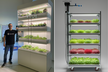
FreshPlaza interviewed Luca Battaglio (in the photo), the chairman of the Group, for an assessment on the import of counter-seasonal melons.
FreshPlaza (FP) - Mr. Battaglio, where do you import the melons from?
Luca Battaglio (LB) – We import approximately 500 pallets per year of Canary melons from Brazil, and 2,000 of Canary, Carribean Gold, Charentais and Piel de Sapo melons from Costa Rica. The most important quantities arrive from Costa Rica because, opposite to what happens in Northern Europe, our consumption depends on the season, and fruit is more commonly purchased during spring and summer. In Italy, in fact, import melons are mostly consumed between March and April.
FP - When does the campaign for the imported product start and how long does it last?
LB – The produce from Brazil arrives in October and the campaign lasts until the first half of February, whereas that from Costa Rica arrives from the end of January and its campaign lasts until the first half of May.
FP – Is the Italian product available at the beginning and at the end of such campaigns?
LB – Our supply is complementary to the national one. In October there is still some produce available in some regions, and Sicily starts producing towards the end of April, but they are only short synergy periods, rather than overlaps.
FP - Are the types and varieties of imported melons the same of national melons?
We try to keep our offer in line with Italian eating habits. For this reason, we don't import Galia melons, as they are not appreciated. We do buy Canary melons from Brazil, as it is considered a late variety and therefore it "covers" the winter season. We normally wait for temperatures to rise to start importing orange flesh fruits from Costa Rica.
FP - What are the prices of imported melons? Is the packaging different?
FP - What are the prices of imported melons? Is the packaging different?
LB - Prices depend on demand, though prices of overseas melons are usually more stable than those of nationals ones. This is because the latter is characterised by high demand and supply and is affected by the weather. With respect to other imported products such as pears, apples and oranges, though, the price of melons definitely changes more.
As regards packaging, it is very similar to the national product, and any differences are not that relevant.
FP - Do supermarkets establish the supply of imported melons in advance?
LB – There is a sort of customer retention for imported apples, pears, oranges, lemons and definitely for bananas and pineapples. Let's say that we know on which customers we can count on, and they know that there are safe import programmes concerning both quantity and quality.
FP – Are imports affected by the economic crisis?
LB – Of course we are affected, but it's rather difficult to quantify how much. In order to assess an import campaign, demand must be taken into account. At the moment, less produce is arriving in Europe because other destinations like the United States and Arab and Asian countries have the priority.
FP - What are the main difficulties for suppliers exporting to Italy?
LB – There are no particular phytosanitary or bureaucratic restrictions, but maybe they are wary of a shrinking market i.e. Europe, and there's the risk of entering business with companies that are not reliable.
FP – Research is currently working on extending the Italian melon season. Do you think that new early or late cultivars will be introduced?
LB – The availability of the product has already been extended: Italian supply now goes from the end of April to the end of October, and it's quite sufficient.
The next step is going to be investing on variety innovations to obtain melons with a better taste and a longer shelf-life, ideal for the consumer and the distribution worlds respectively.
FP - Does the quality of imported produce differ from that of the national one?
FP - Does the quality of imported produce differ from that of the national one?
LB – As it has to travel 2 to 3 weeks by sea, of course the produce has a different quality than what can be consumed short after it has been harvested. However, the progress made in the past few years enables us to manage fruits that are still sweet and tasty.
Contacts
Battaglio spa
Interporto SITO
Torino
Tel. (+39) 011 3494444
Fax: (+39) 011 3494448
Email: [email protected]
Web: www.battaglio.it