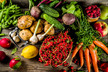
Fruit and vegetables then, can represent a worry free eating experience for Jewish people, having the status of being "parev" or neutral foods that can be eaten with both meat and dairy. However, certain things must still be borne in mind.
Parev status relates to natural, unprocessed foods and the status may be lost in processing. For example, parev foods, such as fruit and vegetables, may lose their status if processed with dairy products or with certain additives. The problem is that such information is often not offered on the packaging.

Because of this, the production of a clearly marked parev food item can make for an easy entry into the kosher marketplace for processors and one that has the largest sales potential.
When it comes to the fresh food items, certain things must still be taken into consideration, however. For a non Jewish person it may simply suffice to wash a piece of fruit to ensure that it is free of dirt and pesticide residue. Though a Jew must take extra care to ensure that the food does not contain any bugs, as consumption of insects if forbidden under Kosher law.
Kosher observations relating to fruit and vegetables goes even further than this. Produce grown in Israel, for example, is considered special as it has been grown in the soil of the Holy Land.
The status of such food can be further elevated if it has grown during the Shemitta, the sabbatical seventh year, when the land is left fallow and trees and vines unpruned. The produce of this year must not be eaten by Jewish people.
Under Kosher law there are instructions also as to avoiding both over indulgence and waste of foods, which, adherent point out, ensures a balanced diet.
Fruit and vegetables have another advantage over some other food types in Kosher consumption - Jewish people are instructed to keep themselves healthy under Kosher law and foods don't come much healthier than fruits and vegetables.
For more information:
Russell J. Brown
KLBD
Tel: +44 (0) 7947 006 117
www.klbdkosher.org